
Most “real estate income” advice assumes you’re willing to become a landlord, buy a second property, or flip houses for a living.
This guide doesn’t go there.
Every option here uses the house you already live in your spare room, your driveway, your yard, your garage, your storage space. No large capital investment. No property management company. No becoming a full-time real estate operator.
These are the ways to make money with your house that work for regular homeowners who want extra income from what they already own.
Zero-Setup Options (Start This Week)
These require no renovation, no equipment, and no upfront spending. You’re monetizing space and assets you already have.
Rent your driveway or parking space

If your home is near a stadium, airport, train station, downtown area, or any place where parking is scarce, your driveway is worth money. Commuters, event attendees, and travelers pay consistently for reliable nearby parking.
Platforms like SpotHero and Parkade connect homeowners with drivers looking for parking. You set your price and availability. Monthly recurring parkers provide the most consistent income $50–$200 per month depending on location. Event-based parking can generate $20–$50 per event per space.
This is the simplest entry point for how to make money with your house because it requires nothing beyond an available spot and a listing.
Rent storage space in your garage or basement
Empty garage space, basement rooms, or any dry, secure area can be rented to people who need storage. The demand is consistent people downsizing, moving between homes, and accumulating more than their current space holds always need additional storage.
Platforms like Neighbor.com specialize specifically in peer-to-peer storage rentals. Homeowners list their available space, set their price, and handle their own access terms. Garage storage typically rents for $50–$150 per month; basement space for $75–$200 depending on size and condition.
Rent your yard for dog use
If you have a fenced yard, Sniffspot connects dog owners who want a private, safe space for their dogs to run with homeowners who have that space available. You set your hourly rate, your availability, and any house rules. Most listings charge $10–$25 per hour.
This option requires a secure fence otherwise no setup. The income is modest but fully passive once the listing is live.
Low-Setup Options (Minor Preparation Required)
These require some preparation but no significant investment cleaning, staging, or creating a listing.
Short-term room rental (Airbnb)

A spare bedroom consistently rented on Airbnb generates $500–$2,000 per month depending on your location, the room quality, and how often you rent it. Urban areas and tourist destinations earn at the higher end. Suburban or rural areas earn less but still generate meaningful supplemental income.
The setup involves creating an Airbnb listing, photographing the room well, and ensuring the space is clean and comfortable. Consistent communication and reviews build your listing’s ranking over time.
Short-term rental income is more flexible than long-term tenancy you control the calendar and can block dates when you don’t want guests. The tradeoff is more active management: check-ins, clean-ups, and occasional issues require your attention.
Long-term room rental
If the active management of short-term guests feels like too much, a long-term tenant in a spare room provides steady, predictable monthly income with far less day-to-day involvement.
A room in a shared home typically rents for $400–$900 per month depending on location, what’s included (utilities, laundry access), and the room’s quality. Screen tenants carefully, use a written lease even for a single room, and clarify shared space expectations upfront.
Rent your home for photo or video shoots

Production companies, photographers, advertising agencies, and content creators regularly need residential locations and they pay well for them. A home with interesting architecture, good light, or specific aesthetic qualities is rentable.
Location marketplaces like Giggster and Peerspace handle the listing and booking process. Rates vary widely a half-day residential shoot typically generates $300–$800; full-day commercial shoots can pay $1,000–$3,000. Your home doesn’t need to be extraordinary it needs to match whatever the photographer or production is looking for.
Host events in your space
A large backyard, barn, or open floor plan can be rented for private events birthday parties, engagement shoots, small weddings, corporate gatherings. This requires more coordination than passive options, but the per-event income can be substantial.

Event venue rental income ranges from $200 for a small gathering to several thousand dollars for a full-day wedding or production. Check your local zoning and homeowner’s insurance before listing some policies require notification or a rider for commercial use of your property.
Active-Participation Options (Your Time + Your Space)
These combine your home as a location with your active involvement.
Home-based daycare
Running a licensed daycare from your home is one of the highest-income uses of residential space on this list. Parents pay $800–$2,000 per month per child for quality childcare. With four to six children in care, a home daycare generates meaningful full-time income.
The requirements vary by state: most require a childcare license, home inspection, first aid certification, and compliance with safety standards. The licensing process takes months but is straightforward. This is genuinely one of the better ways to make money with your house for someone who enjoys working with young children and wants to eliminate commuting.
Workspace rental
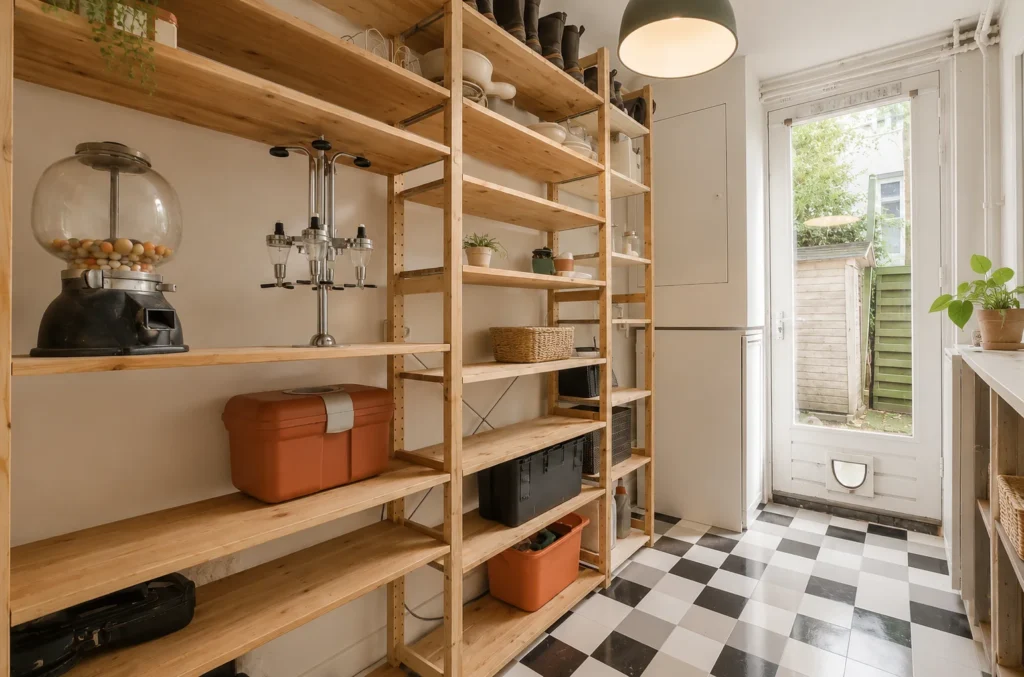
If you have a dedicated home office, quiet meeting room, or large dining table with good internet access, remote workers and small businesses rent these by the hour or day. Peerspace and similar platforms list workspace alongside event venues.
Income varies $15–$50 per hour for a basic work session; $100–$300 per day for a meeting room rental. Requires your home to be clean, professional, and consistently available during the rental windows.
Garden or grow space rental
A large yard can be rented to urban gardeners who want growing space but don’t have it. Platforms like Yard to Table and local urban farming groups facilitate these arrangements. Income is typically modest $100–$300 per season per plot but completely passive once the arrangement is established.

A Brief Note on Taxes
Income from renting out your home or space is taxable in most jurisdictions. Short-term rentals, parking income, and storage rental all typically need to be reported.
The good news: expenses directly related to the rental (portion of utilities, cleaning costs, platform fees, any repairs specific to the rental space) are generally deductible against that income. Keep records from the start.
For short-term rentals specifically, the IRS “14-day rule” is worth knowing: if you rent your home for 14 or fewer days per year, that rental income is generally tax-free in the US. Beyond 14 days, normal rental income reporting applies.
Speaking with a tax professional before starting a rental arrangement is worth the cost especially for higher-income options like room rental or event hosting.
How to Choose the Right Option
The right way to make money with your house depends on three things: what space you actually have, how much active involvement you want, and how quickly you need income.
If you want income this month with zero setup: driveway parking or storage space rental.
If you want consistent monthly income with low ongoing effort: long-term room rental or yard rental.
If you want higher income and can manage more active involvement: Airbnb short-term rental, location rental for shoots, or home daycare.
Every homeowner has something worth monetizing. The gap between owning a home and earning from it is almost always smaller than it looks.
Frequently Asked Questions
Do I need to tell my mortgage lender if I rent out a room?
In most cases, yes particularly for short-term rentals. Some mortgage agreements have restrictions on commercial use of the property. Review your mortgage terms and contact your lender if unsure. Many conventional mortgages allow owner-occupied rental without issue; others require notification.
Does renting out my home affect my homeowner’s insurance?
Often yes. Short-term rental activity may not be covered under a standard homeowner’s policy. Contact your insurer before listing your home or space on any platform. Many insurers offer a short-term rental endorsement or rider at minimal additional cost.
Which option generates the most income?
Home-based daycare and short-term room rental (in high-demand locations) generate the most income per month. Location rental for film and photo shoots generates the most per day. Parking and storage are the most passive but generate the least.
Can renters make money with their homes, not just owners?
Some options are renter-accessible with landlord permission subletting a room (where lease allows), renting parking (where it’s assigned to you), or hosting events in a yard. Always review your lease and get landlord approval in writing before monetizing any part of a rented home.
For more on building income from what you already have, read our guide on realistic passive income ideas for beginners and ways to make money from home without leaving the house.