
Small spaces don’t have to feel chaotic. They just need smarter systems than big spaces do.
The difference between a small home that feels cramped and one that feels calm and functional isn’t square footage it’s organization. When everything has a place and that place makes sense, a small space feels intentional. When it doesn’t, even a large space feels cluttered.
These 25 hacks are the ones that actually make a difference in small spaces not just aesthetically, but in how the space functions every single day.
The Rule That Changes Everything in a Small Space
Before the hacks: everything in a small space must earn its place.
In a large home, you can store things you might need someday. In a small space, that approach creates chaos fast. Every item either gets used regularly, has genuine sentimental value, or leaves.
Apply this once really commit to it and the organization hacks below become twice as effective. You’re not organizing clutter. You’re creating systems for things that actually belong.
Kitchen Organization Hacks
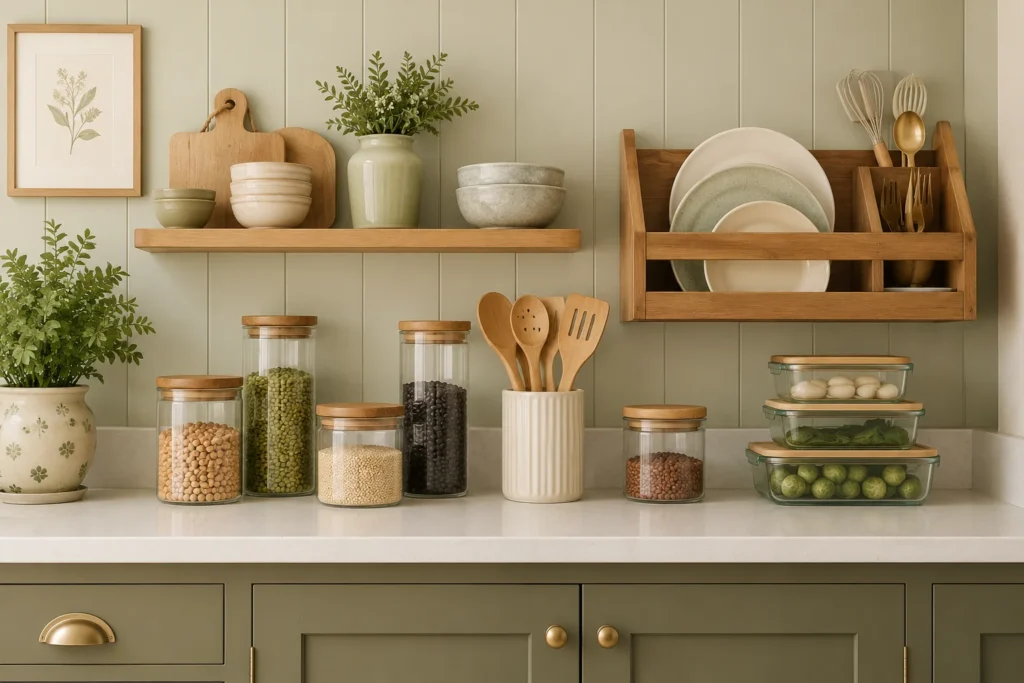
1. Use the Inside of Cabinet Doors
Mount a small rack, hooks, or an over-door organizer on the inside of cabinet doors. Spice racks, pot lids, cleaning supplies, foil and wrap all of these live inside cabinet doors in a well-organized small kitchen, freeing shelf space for bigger items.
2. Stack With Risers
Cabinet risers ($8–$15) double the vertical storage in any cabinet. Stack plates on one level, bowls on another. Stack canned goods in two rows instead of one. The wasted vertical space in most cabinets is significant risers use it.
3. Hang a Magnetic Knife Strip
A magnetic knife strip on the wall removes a knife block from the counter entirely. Counter space in a small kitchen is precious. Anything that moves from horizontal to vertical creates more room.
4. Use the Top of the Fridge
A flat surface at the top of the refrigerator is storage space most people ignore. A small basket or tray holds items used infrequently — extra appliances, baking supplies, rarely used gadgets.
5. Drawer Dividers for Everything
A junk drawer is a small space’s worst enemy. Inexpensive bamboo or plastic dividers ($5–$15) turn any drawer into organized sections. Utensil drawer, junk drawer, office supply drawer divided drawers hold more and stay organized because everything has a designated slot.
6. One In, One Out Rule for the Kitchen
For every new kitchen item that comes in, one goes out. In a small kitchen, this rule prevents gradual accumulation that eventually makes the space unworkable.
Bathroom Organization Hacks
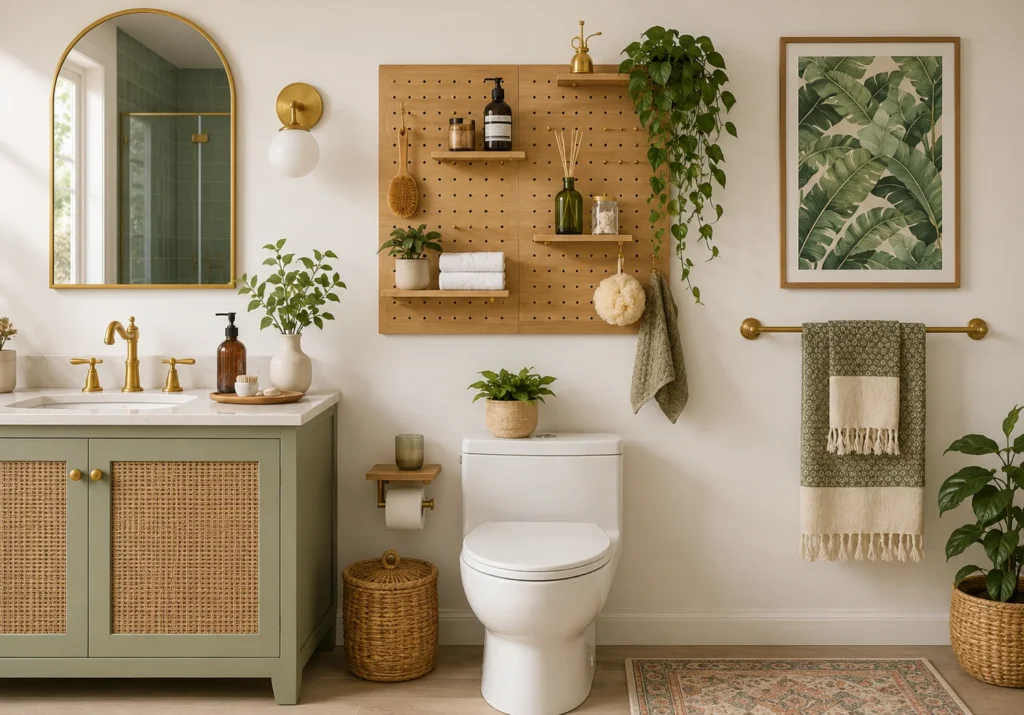
7. Over-the-Toilet Shelving
The vertical space above the toilet is almost always unused in small bathrooms. An over-toilet shelf unit ($30–$60) adds three to four shelves of storage without touching the floor footprint at all. Towels, toiletries, extra supplies everything that currently crowds the under-sink cabinet can move up.
8. Magnetic Strips Inside Medicine Cabinet Doors
Same principle as the knife strip a small magnetic strip inside the medicine cabinet door holds bobby pins, nail clippers, tweezers, and small metal items that otherwise rattle around in drawers.
9. Shower Caddy That Hangs From the Showerhead
A hanging shower caddy keeps everything off the edges of the tub and the floor. The two-tier version holds shampoo, conditioner, soap, and razors for one or two people. No drilling required.
10. Use a Tension Rod Under the Sink
A tension rod installed horizontally under the bathroom sink creates a second hanging level. Spray bottles hang from it. A small basket clipped to it holds extra supplies. The unused vertical space under the sink becomes functional storage.
11. Labels on Everything in the Bathroom
Clear labels on bathroom baskets, bins, and drawers make organization sustainable. When everyone in the home knows where things go, things go there. Without labels, small spaces drift back toward chaos within weeks.
Bedroom Organization Hacks
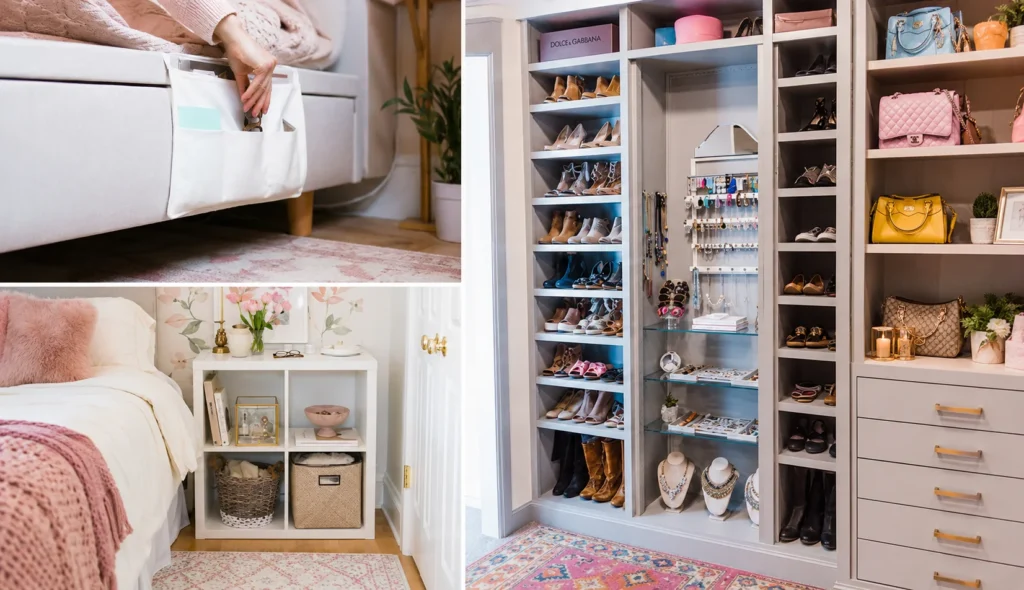
12. Maximize Under-Bed Storage
The space under the bed is the most underused storage in most bedrooms. Flat rolling bins ($15–$25) hold off-season clothing, extra linens, or shoes. Bed risers ($15–$20) add 6 inches of clearance for larger bins.
Vacuum storage bags take bulky items winter coats, extra pillows, and seasonal blankets and compress them to a fraction of their size for under-bed storage.
13. Double Your Closet Space With a Second Rod
A second hanging rod installed below the first turns one closet section into two. Short items shirts, folded pants, jackets hang on the top rod. A second rod at the right height doubles hanging capacity for the price of a rod and two brackets ($10–$20 total).
14. Use the Back of the Closet Door
An over-door organizer on the back of the closet door holds shoes, accessories, bags, or folded items. This is floor-free, wall-free storage that uses a surface almost everyone ignores.
15. Fold Clothes Vertically in Drawers
The KonMari vertical folding method stores significantly more clothing in a drawer than traditional flat stacking and lets you see everything at once without disturbing other items. No special products required. Just fold items into rectangles and stand them upright side by side.
16. Hooks on Every Empty Wall
A row of hooks on a bedroom wall holds bags, hats, jewelry, and tomorrow’s outfit. Hooks are the most storage per dollar and per square inch of any organizational product. Command hooks require no drilling and hold up to 7.5 pounds ($5–$8 for a pack of four).
Living Room Organization Hacks
17. Ottoman With Hidden Storage
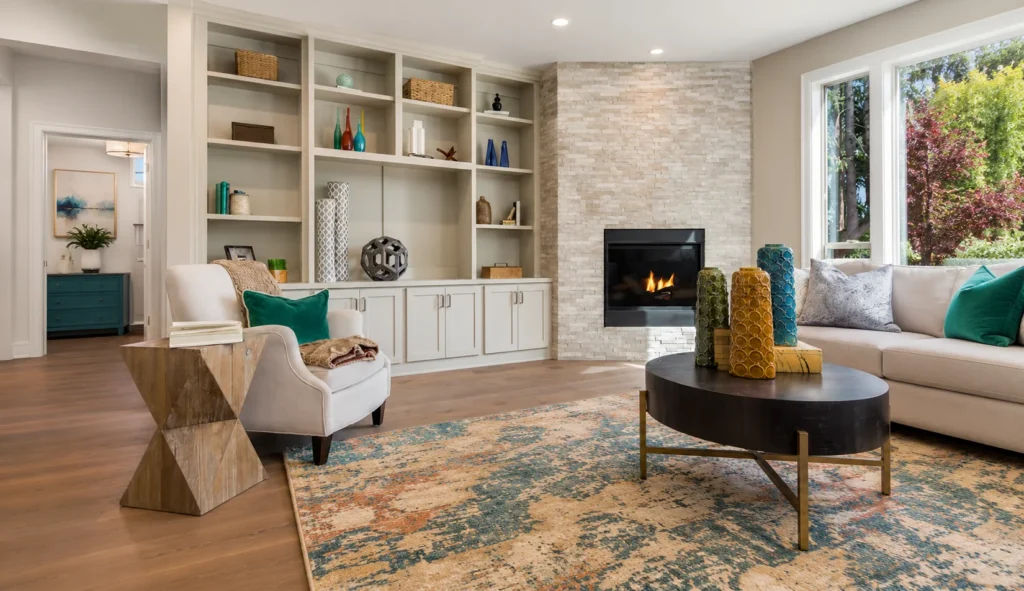
An ottoman that opens up for storage replaces a coffee table, provides seating, and stores blankets, remotes, games, and magazines all in one piece of furniture. In a small living room, furniture that does double duty is always the better choice.
18. Baskets for Visual Organization
Baskets make a pile of things look intentional. A basket for throw blankets, a basket for magazines, a basket for kids’ toys that need to be in the living room each one contains its category and makes the room look styled rather than cluttered.
19. Floating Shelves Instead of Bulky Furniture
Every bookshelf or storage unit that sits on the floor takes floor space. Floating shelves use wall space instead. In a small living room, moving storage off the floor and onto walls makes the room feel significantly larger.
20. Cord Management
Visible cords are visual clutter that makes a space feel messier than it is. Cable clips ($5–$8) route cords along walls and baseboards. A cable box ($10–$20) hides the power strip and multiple cords in one tidy unit. Five minutes of cord management makes a living room feel noticeably cleaner.
Entryway and General Small Space Hacks
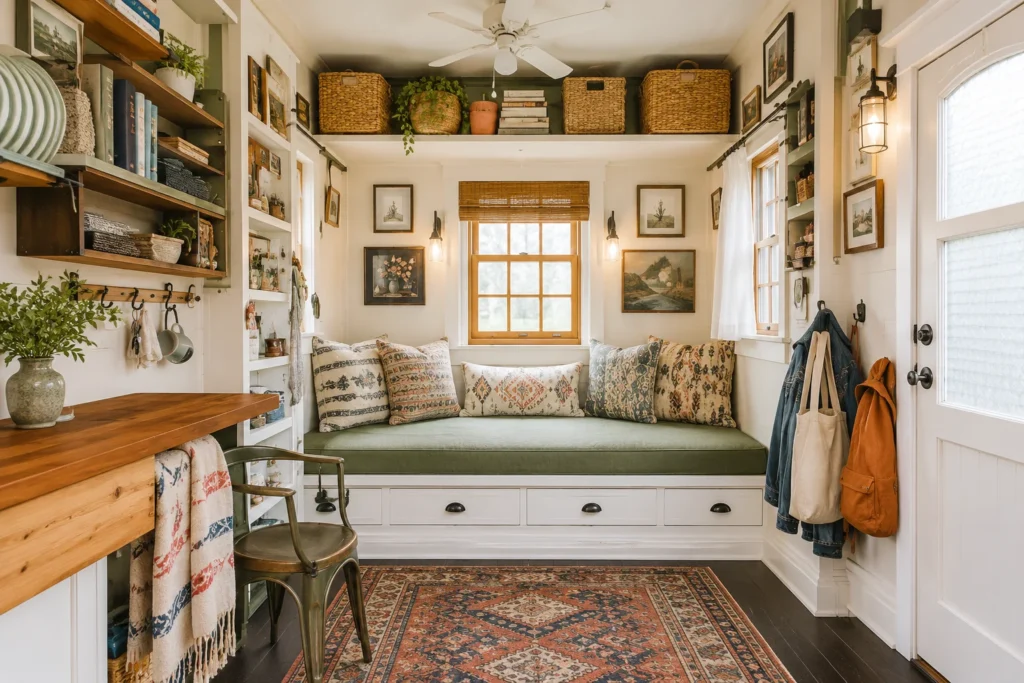
21. Create a Drop Zone
The entryway is where small home chaos usually begins keys, bags, mail, shoes, and jackets all pile up because there’s no system.
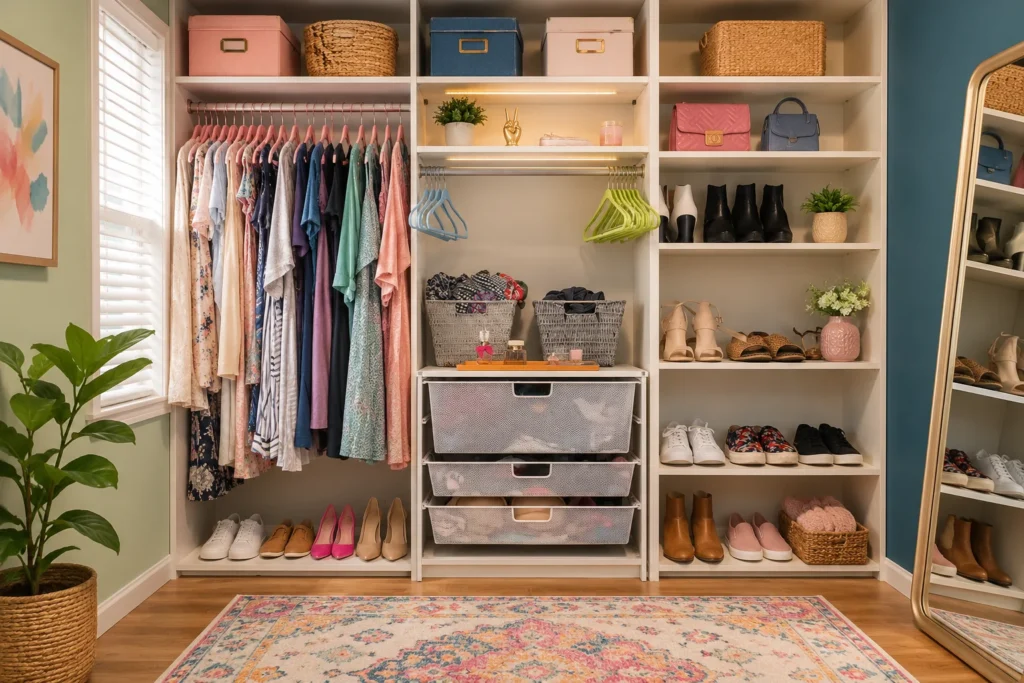
A drop zone is a designated spot for all of it: hooks for bags and keys, a small tray for mail, a shoe rack or basket for shoes. It doesn’t need to be a mudroom. It needs to be consistent. Even a small section of wall with two hooks and a tray creates enough structure to keep the entry clear.
22. Use Vertical Wall Space Everywhere
The floor is used. The horizontal surfaces are used. The walls are usually ignored.
Wall-mounted organizers, pegboards, floating shelves, hooks, and magnetic boards all move storage from horizontal surfaces to vertical walls which is where small spaces have room to grow. A pegboard in the kitchen, a floating shelf in the bathroom, a hook system in the entryway each one recovers counter or floor space.
23. One Declutter Session Per Season
Small spaces don’t stay organized without maintenance. Four times a year before each new season spend one hour going through every room and removing what no longer belongs. Donate, sell, or discard.
This single habit prevents the gradual accumulation that eventually makes even a well-organized small space feel full again.
24. Everything Needs a Home Before It Comes In
Before bringing any new item into a small space, know where it will live. If there’s no place for it, the item either doesn’t come in or something else goes out to make room.
This prevents the most common cause of small space clutter: things that arrive but never find a permanent home and end up on surfaces indefinitely.
25. Clear Storage Containers
Opaque bins hide what’s inside which means you forget what’s inside, which means you stop using what’s inside and buy duplicates. Clear containers in pantries, bathrooms, closets, and under beds let you see what you have at a glance. Less waste, less buying what you already own, less time searching.
The Cheapest Small Space Organization Products Worth Buying
If you’re going to spend money on organization, these give the best return:
Command hooks (pack of 4–6): $5–$8 goes everywhere, holds more than expected Drawer dividers: $8–$15 transforms any drawer Cabinet risers: $8–$15 doubles vertical storage Tension rod (bathroom): $5–$10 creates hanging space under sink Clear stackable bins: $10–$20 visible storage everywhere Vacuum storage bags: $15–$25 compresses bulky items dramatically
Total for everything: $51–$93. Most small spaces need two or three of these, not all six.
For more ways to make a small home work harder on a budget, my guide on how to decorate your home on a budget covers the decorating side of small space living with the same approach.
And if organizing your home is part of a broader effort to manage your money better, my guide on how to make a budget for beginners which you can use alongside any free online budget or home budget spreadsheet, shows how to build the financial structure that supports a more intentional home life.