
A beautiful home and a tight budget are not opposites. They just require a different approach than walking into a furniture store and buying everything new.
The most stylish homes I’ve ever seen on a budget had one thing in common: the people who decorated them were intentional. They knew what they wanted the space to feel like before they spent a single dollar. They shopped secondhand first. They focused on a few impactful pieces rather than filling every corner. And they used what they already owned in new ways before buying anything new.
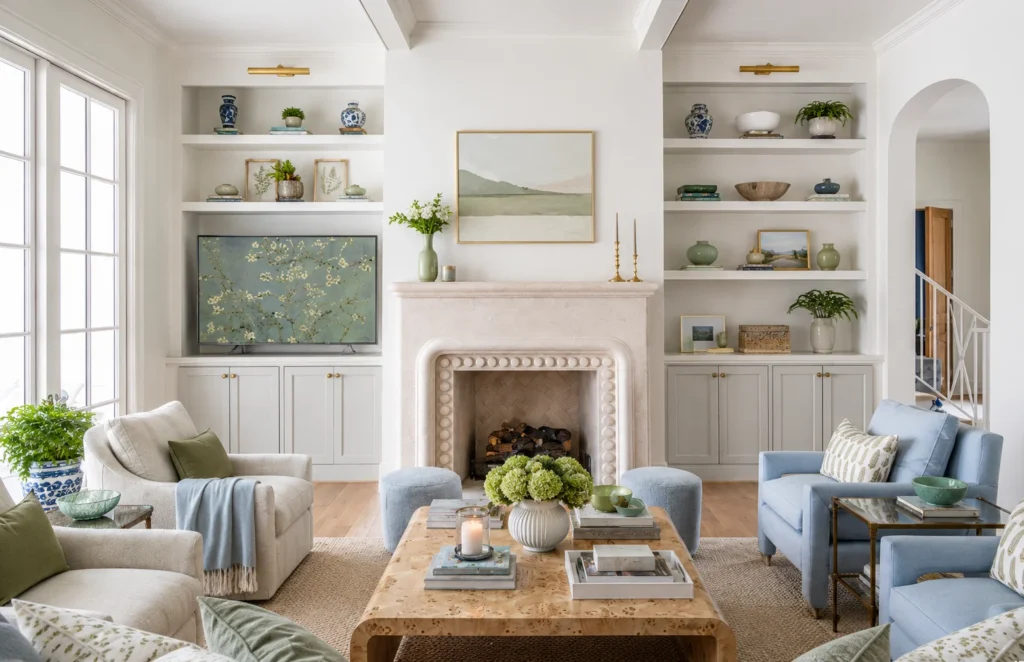
This guide is your master resource for decorating every room in your home on a budget from the living room to the bedroom to the kitchen. Each section links to a deeper dive, but you’ll find the core framework right here.
The Budget Home Decorating Rules That Apply to Every Room
Before we go room by room, these principles apply everywhere.
Shop secondhand first, always. Facebook Marketplace, thrift stores, estate sales, and buy-nothing groups are where the best budget finds live. Furniture that would cost $400 new often sells for $40 used and with a coat of paint or new hardware, looks better.
Define the feeling before you buy anything. Not the aesthetic label (“farmhouse,” “boho,” “minimalist”) the actual feeling. Calm. Cozy. Bright. Energizing. Every purchase should serve that feeling. If it doesn’t, it doesn’t come home.
One statement piece per room. A beautiful room doesn’t need ten interesting things. It needs one or two pieces that do the work a mirror, a rug, a piece of art and simpler things around them. Trying to fill every surface is how decorating gets expensive and cluttered.
Rearrange before you redecorate. Moving furniture costs nothing. Before buying anything for a room, try every possible furniture arrangement. Most rooms look dramatically different often better with the same pieces in a new configuration.
Paint is the highest-leverage budget move. One can of paint ($25–$40) transforms a room more than almost any other single purchase. An accent wall, painted furniture, a newly painted front door these changes cost almost nothing and look significant.
Declutter first. A decluttered room looks more intentional, more spacious, and more styled than a full room. Before decorating anything, remove what doesn’t belong. Most rooms need less added they need things removed.
Living Room: Where Budget Decorating Has the Most Impact
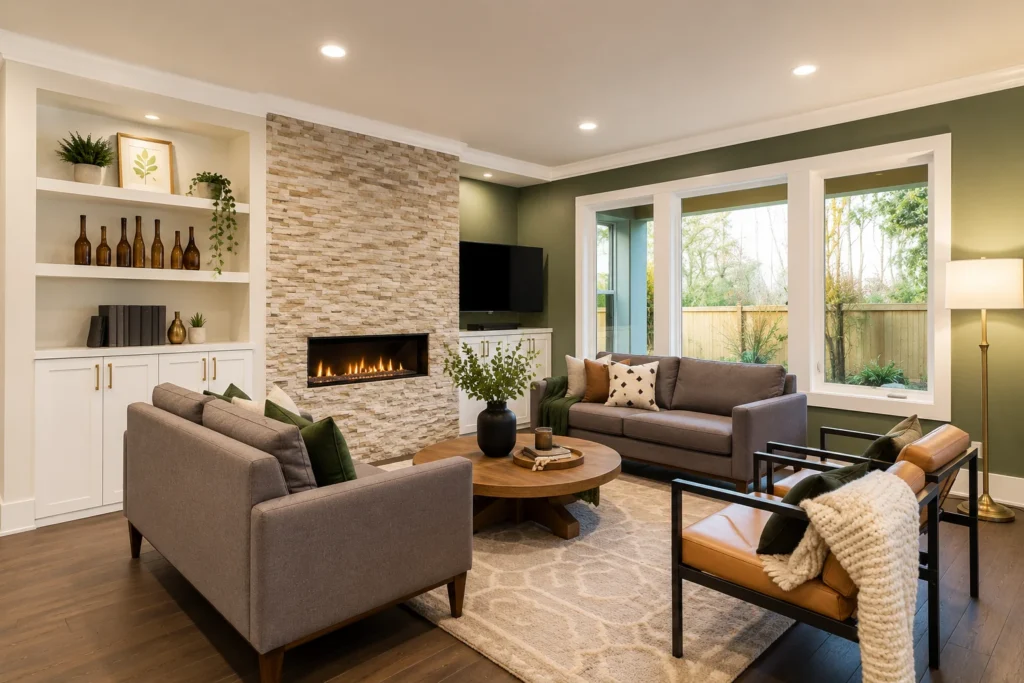
The living room is where most decorating attention (and money) goes which means it’s also where the most budget-conscious decisions matter most.
The rug is the foundation. A good rug anchors a living room more than any other single element. Look for large rugs at discount home stores (HomeGoods, TJMaxx), online marketplaces, or secondhand. The size matters more than the price a rug that’s too small makes the whole room feel off.
Update throw pillows and blankets seasonally. These are the cheapest way to completely change a room’s look. A new set of pillow covers (not whole pillows) costs $20–$40 and transforms a sofa.
Gallery walls cost almost nothing. Print photos at a drugstore for $0.25 each. Frame them in matching dollar store frames. Arrange them on a wall. The labor is an hour. The impact is significant.
Mirrors make rooms look bigger and brighter. A large mirror on a dark wall or across from a window costs $30–$80 secondhand and does more for a room than almost any other purchase.
Plants are the cheapest styling element available. A few plants in simple pots add color, life, and texture to a room for $5–$15 each. Pothos, snake plants, and spider plants are nearly impossible to kill and stay green indefinitely.
Bedroom: Budget Decorating That Actually Affects How You Feel
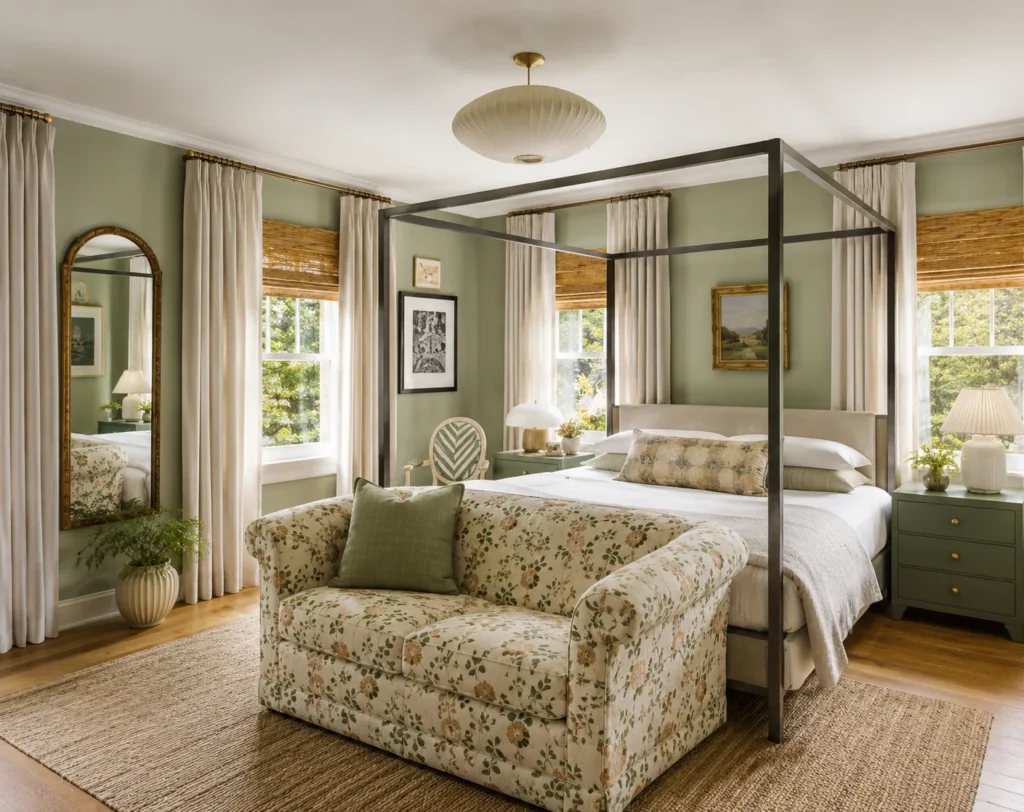
The bedroom has a direct impact on how well you sleep and how calm you feel which makes decorating it well worth prioritizing even on a tight budget.
Invest in bedding, not furniture. Quality sheets and a good duvet cover transform a bedroom’s look and feel more than furniture does. A white duvet cover from Amazon or IKEA ($30–$60) makes any bed look hotel-quality.
Headboards are easy to DIY. A piece of plywood, some foam, batting, and fabric create a custom upholstered headboard for under $50. YouTube has step-by-step tutorials that are genuinely easy to follow.
Nightstands don’t have to match or even be nightstands. A small stool, a stack of books with a tray on top, a vintage side table from the thrift store any surface at the right height works. Matching furniture sets are expensive and unnecessary.
Curtains hung high and wide make windows look larger. Hang curtain rods close to the ceiling (not the window frame) and extend the rod 6–12 inches beyond the window on each side. The curtains pool slightly at the bottom. The whole room looks taller and more elegant. Curtains from IKEA cost $15–$40 a panel.
Keep the bedroom clear of clutter. More than any other room, the bedroom benefits from having less. Clear surfaces, minimal decor, and good lighting cost almost nothing and make the space feel like a retreat.
Kitchen: Budget Updates That Make a Real Difference
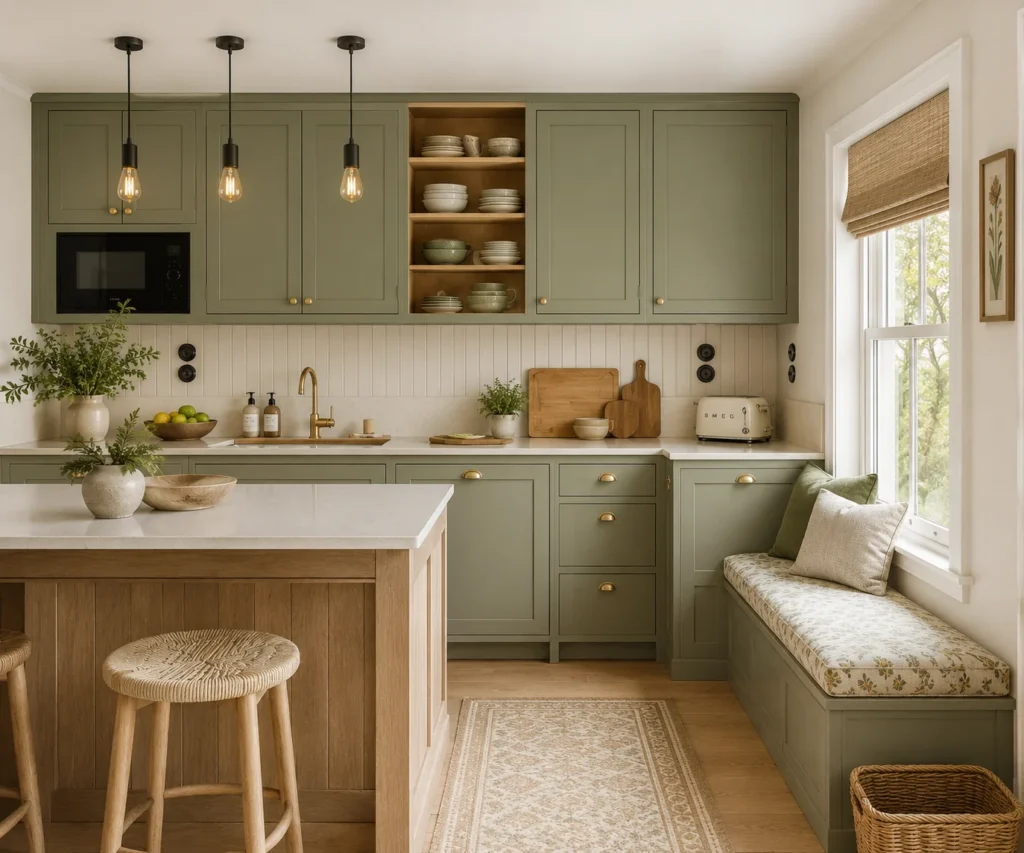
Kitchens are expensive to renovate but inexpensive to refresh because the updates that actually change how a kitchen looks and feels don’t require touching the structure.
New cabinet hardware is transformative. Replacing old brass or plastic knobs and pulls with modern hardware costs $2–$5 per piece. A kitchen with 20 cabinet doors gets an entirely new look for $40–$100.
Open shelving is cheaper than upper cabinets. Removing upper cabinet doors and painting the insides creates open shelving that looks intentional and modern. Remove, patch, paint no new materials required.
A new faucet changes the whole sink area. A quality kitchen faucet can be installed in an afternoon and costs $50–$150. It changes the entire feeling of the space.
Organize what you have before buying anything. A kitchen that’s organized everything grouped, labeled, visible looks and functions better than a disorganized one with expensive appliances. Clear jars for dry goods, simple drawer organizers, a clean countertop. These cost almost nothing.
A small herb garden on the windowsill. Basil, mint, parsley a few small pots on a kitchen windowsill add life and color for $5–$10 and provide fresh herbs that cost $3 a bunch at the grocery store.
Bathroom: Maximum Impact, Minimum Budget
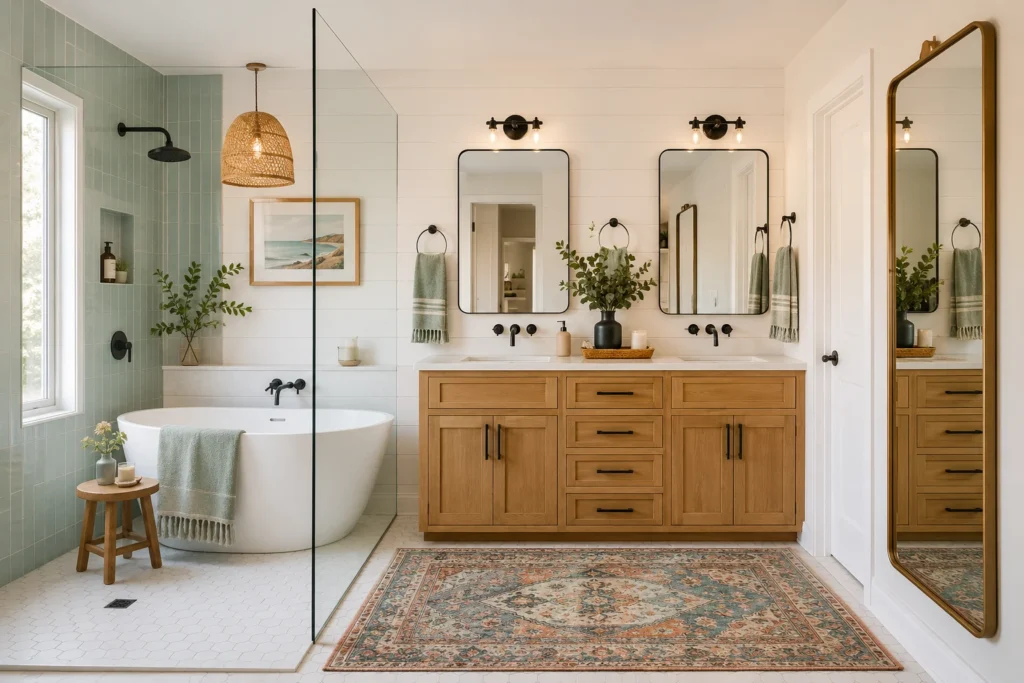
Bathrooms are small spaces where a few changes make a disproportionately large difference.
A new shower curtain completely changes a bathroom. This is a $20–$40 purchase that takes five minutes to swap. The shower curtain is one of the most visible elements in the room updating it is the fastest bathroom refresh available.
New towels in a single color palette. Mismatched towels make a bathroom feel chaotic. A matching set in white, gray, or a single color costs $20–$40 and makes the space feel pulled together immediately.
Replace the toilet seat. An old, yellowed toilet seat is one of the most noticeable things in a bathroom. A new one costs $20–$30 and installs in 10 minutes.
A mirror with a frame. Most builder-grade mirrors are plain rectangles glued to the wall. Frame them with molding from the hardware store ($15–$30 total), paint to match, and the mirror looks custom.
Candles and a simple tray. A candle, a small plant, and a soap dish on a tray make a bathroom counter look styled instead of functional. Under $20 total.
How to Budget for Home Decorating

Before spending anything, decide on a total home decorating budget not per room, one total number that covers everything you want to do across the whole home.
This is the same principle as a household budget for any other spending category. A number in advance turns every purchase into a deliberate choice rather than an impulse. When you’re tracking home decorating as a line item in your monthly expenses list, you can see exactly how much you’ve spent and how much remains.
For most people decorating on a tight budget, $50–$100 per month set aside specifically for home allows meaningful progress over a year without financial strain. At $75/month, that’s $900 over a year enough to make real changes in every room of a home.
For the complete budget framework that makes room for home decorating alongside all your other financial goals, my guide on how to make a budget for beginners walks through how to set up spending categories that include home improvement as a sinking fund.
And for the frugal living principles that apply to home decorating as much as to everything else, my guide on 50 frugal living tips has specific strategies for spending less on the home while getting more from it.