
The pressure to spend at Christmas is real and relentless.
Every ad, every store display, every well-meaning family member asking what you want seems to be pushing the same message: more spending equals more love, more fun, more magic. And for a lot of people, that pressure results in January credit card statements that take months to recover from.

Here’s what actually creates a memorable Christmas: presence, tradition, thoughtfulness, and time together. Not price tags.
A cheap Christmas doesn’t mean a lesser Christmas. It means a more intentional one where you’ve decided what actually matters and built the holiday around that instead of around a spending spiral.
This guide gives you 15 specific ways to have a genuinely wonderful Christmas on a tight budget. Start reading this now the earlier you implement these strategies, the easier Christmas becomes financially. August and September are the ideal time to start, which is exactly why you’re here.
Why Starting Early Is the Secret to a Cheap Christmas
The biggest reason Christmas feels expensive is timing. Most people don’t think about Christmas until November and by then, there’s no time to save, no time to compare prices, and no time to make thoughtful gifts. Panic buying is expensive buying.
Starting in August or September changes everything. You have time to:
- Save a little each month so December isn’t a financial emergency
- Shop sales as they happen instead of buying at full price in December
- Make homemade gifts with time to spare
- Plan your guest list and menu without pressure
The cheapest Christmas is always the one you planned for not the one that arrived by surprise. Every strategy below works better the earlier you start it.
Step 1: Set Your Total Christmas Budget First
Before anything else gifts, food, decorations, travel decide on a total number. Not per category. One total number that covers everything Christmas-related.
Write it down. This is your Christmas budget planner number for the year.
For most people on a tight budget, a workable Christmas budget falls between $200 and $600 total less if your family agrees to scale back, more if you have a larger family or hosting responsibilities. The exact number matters less than having one.
Without a total number, Christmas spending expands to fill whatever credit is available. With one, every decision gets measured against it: “Does this fit in the budget?” becomes the question that replaces “Do I want this?”
Divide your total by the number of months remaining until December. That’s your monthly Christmas sinking fund contribution a small, painless amount set aside each month rather than one giant December hit.
Example: $400 budget set in August = $50/month for 8 months. That’s it. No December panic, no January debt.
Step 2: Have the Gift Budget Conversation Early

The single most effective way to reduce Christmas spending is to have an honest conversation with your family and friends before anyone starts shopping not after.
Most people assume everyone else wants to spend more than they do. They’re often wrong. A lot of people are quietly relieved when someone suggests scaling back they just didn’t want to be the one to say it.
Have the conversation in September or October at the latest. Options that work:
Set a dollar limit per gift. $25, $30, or $50 per person agreed on in advance. Everyone shops within the same constraint. Nobody feels bad about giving a smaller gift when the limit applies to everyone.
Secret Santa / name drawing. Instead of buying for everyone, each person draws one name. You give one thoughtful gift rather than twelve small ones. Works beautifully for large families.
Experience gifts only. Agree that all gifts will be experiences a dinner out together, a day trip, a cooking class rather than physical items. Often more memorable and frequently cheaper.
No adult gifts, kids only. Many adults genuinely prefer not to exchange gifts they just don’t want to say it first. This conversation often gets a relieved response from everyone.
The conversation feels uncomfortable for about five minutes. The financial relief lasts two months.
Step 3: Make a Gift List and Stick to It
Once you know your total gift budget, list every person you’re buying for and assign a specific dollar amount to each. The amounts should add up to your gift budget not exceed it.
This is your personal expense tracker for Christmas shopping. Every gift gets checked off as purchased, and the running total gets updated with every purchase.
Without a list, Christmas shopping becomes a series of individual decisions where each one seems reasonable but the total becomes unreasonable. With a list, you know before you buy whether something fits. And you stop buying “just one more thing” for people who already have a gift.
Keep your list in your phone. Check it every time you shop. Stick to it.
Step 4: Shop Sales Year-Round (Not Just in December)

The best gifts at the cheapest prices are found in the months before Christmas not the weeks before. This is the budget management principle that makes the most difference for Christmas spending.
January sales Christmas decorations and wrapping supplies go to 50–75% off on December 26th. Buy next year’s supplies now.
Black Friday and Cyber Monday Late November deals on electronics, clothing, and home goods. If you know what you’re buying ahead of time, you can target specific items instead of impulse shopping.
Back-to-school sales (August–September) Office supplies, craft supplies, organizational items all useful for homemade gifts and wrapping.
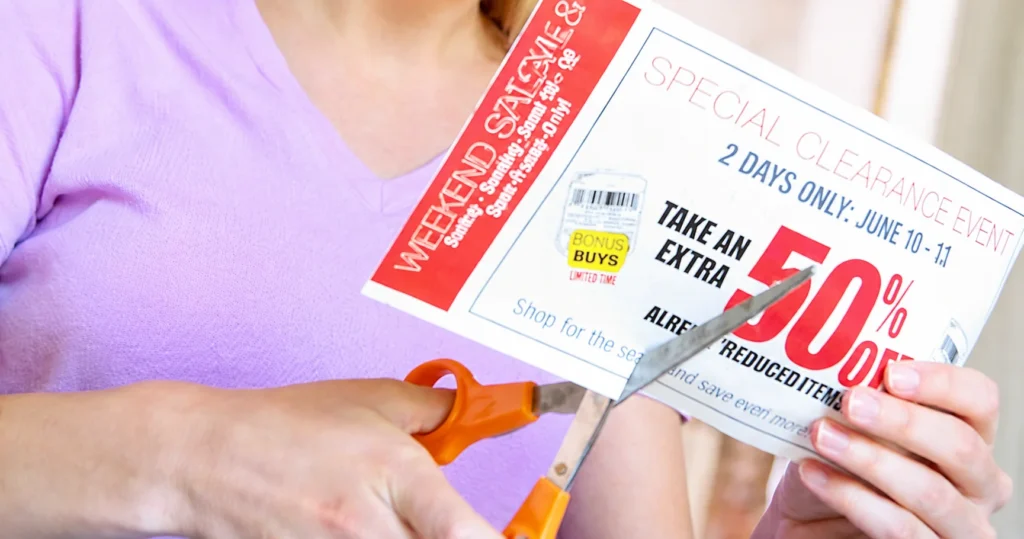
Flash sales and clearance throughout the year If you see something in June that would be a perfect gift for someone on your list, buy it. Store it. Done.
Keep your gift list on your phone so you can cross-reference it whenever you encounter a sale.
Step 5: Give Thoughtful Gifts That Don’t Cost Much

The most remembered gifts are rarely the most expensive ones. They’re the ones that show someone was paying attention.
Homemade food gifts Baked goods, homemade granola, flavored salts, infused oils, hot chocolate mix in a mason jar. These cost $3–$8 to make and feel significantly more personal than a store-bought item at the same price.
Experience vouchers A homemade coupon for a specific shared experience: a movie night you’ll host, a dinner you’ll cook, a hike you’ll take together. Costs nothing except time.
Consumables Candles, bath products, specialty coffee or tea, a good bottle of something they enjoy. Consumables are universally appreciated, don’t create clutter, and fit easily within a $20–$30 range.
Personalized practical items A monogrammed mug, a custom photo book from a print-on-demand service, a journal with a meaningful note inside. Thoughtful, useful, and affordable.
The key is to give things that reflect the person not things that reflect how much you spent. The best gift-givers are the ones who pay attention throughout the year to what people actually need or want. Start noting those things now.
Step 6: Reduce Your Christmas Food Budget

Holiday food spending is one of the largest and most overlooked parts of Christmas costs. Hosting a Christmas dinner or contributing to one can quietly become very expensive.
Plan the menu in advance Decide exactly what you’re making before you shop. Wandering a grocery store in December without a plan is one of the most reliably expensive ways to spend money.
Assign dishes to guests If you’re hosting, ask each guest to bring something specific. Splitting the food cost across everyone makes hosting significantly more affordable.
Shop sales before December Non-perishable Christmas staples (certain drinks, baking supplies, canned goods, chocolates) can be bought in October and November when they’re at regular prices rather than holiday-premium prices.
Simplify the menu Three excellent dishes beat six mediocre ones. Nobody is counting the number of side dishes. They’re enjoying the meal and the company.
Skip the premium packaging Premium holiday packaging on basic food items costs 30–50% more than the same item without the Christmas tin or festive label. Buy the regular version.
Step 7: Decorate on a Budget (Without It Showing)
Christmas decorations are one of the easiest categories to cut without any visible impact because almost nobody can tell whether your decorations cost $200 or $20.
Use what you have Candles, greenery from outside, string lights you already own, books stacked decoratively, simple wrapped boxes. A thoughtful arrangement of what you already have looks more intentional than a cluttered pile of new purchases.
Buy after Christmas for next year As mentioned in Step 4, December 26th clearance is where smart decorators shop. Next year’s decorations cost a fraction of this year’s.
Make your own Paper garlands, dried orange slices, pinecone arrangements, handwritten gift tags. These take time but cost almost nothing and look genuinely beautiful.
Set a decoration budget and stick to it $20 can buy a lot of candles, a string of lights, or a wreath. Decide the number before you go near a home goods store in November.
Step 8: Cut Travel Costs
If Christmas involves travel, the cost can dwarf everything else combined. A few strategies that make a real difference:
Book early Flights and trains for Christmas travel are cheapest when booked months in advance. If you’ve started planning in August, this is exactly the right time to book.
Be flexible on dates Traveling December 23rd instead of December 24th, or returning December 27th instead of December 26th, can reduce travel costs by 30–50%.
Consider driving For distances under 6–8 hours, driving is almost always significantly cheaper than flying once you account for airport fees, luggage charges, and transport to and from the airport.
Discuss hosting rotation If your family travels to a single person’s home each year, discuss whether rotating hosting responsibilities (and therefore travel costs) would be fairer and more affordable for everyone.
Step 9: Track Every Christmas Purchase

As you shop, keep a running total of everything you’ve spent against your Christmas budget planner. This is your personal money management system for the holiday season not complicated, just consistent.
Update it with every purchase. A note in your phone, a simple spreadsheet, any finance planner you already use — whatever you’ll actually maintain.
When you can see the running total climbing toward your limit in real time, you make different decisions than when you’re shopping and thinking “I’ll add it up later.” Later is always over budget.
Step 10: Say No to Things That Don’t Matter to You
Christmas is full of optional spending that accumulates quietly: office gift exchanges, neighbor gifts, holiday cards, charity fundraisers, classroom teacher gifts, workplace parties.
None of these are mandatory even when they feel that way.
Decide in advance which ones genuinely matter to you and which ones you’re participating in out of obligation or habit. Opt out of the ones that fall into the second category. Nobody keeps track of who sent Christmas cards. Most people in workplace gift exchanges would genuinely prefer not to participate.
Protecting your budget from obligation spending is one of the most effective things you can do because it’s money that produces almost no enjoyment for anyone, it just circulates.
What to Do With Christmas Money Saved

If you’ve implemented these strategies and arrived at December spending significantly less than usual, the money you didn’t spend deserves a deliberate destination.
Don’t let it dissolve back into January spending. Move it somewhere with purpose: emergency fund, debt payment, savings goal for next year. The discipline you practiced through Christmas compounds when the savings actually go somewhere.
Final Thoughts on a Cheap Christmas
A cheap Christmas and a meaningful Christmas are not opposites. The most memorable Christmas moments — the food, the traditions, the laughter, the time together cost almost nothing.
What costs money is the pressure to perform generosity through spending rather than expressing it through attention and thought. When you decide that Christmas is about the people and the traditions rather than the gifts and the price tags, the holiday gets better and cheaper at the same time.
Start now. Set your budget. Have the gift conversation. Open your sinking fund. The Christmas you build from here planned, intentional, and financially comfortable is the one people actually remember.
For more ways to make your money go further this holiday season and beyond, my guide on how to save money fast on a tight budget has 20 strategies that work year-round including during the expensive months.
And if you’re combining a frugal Christmas with broader financial goals, my guide on how to take control of your finances shows how holiday spending fits into a complete personal finance picture.