
The living room is the most visible room in your home and the one where most people feel the most pressure to spend money they don’t have.
You don’t need a designer budget to have a living room that looks pulled together, intentional, and genuinely nice. You need a few high-impact moves, a willingness to shop secondhand, and an understanding of what actually makes a room look expensive versus what just costs a lot.
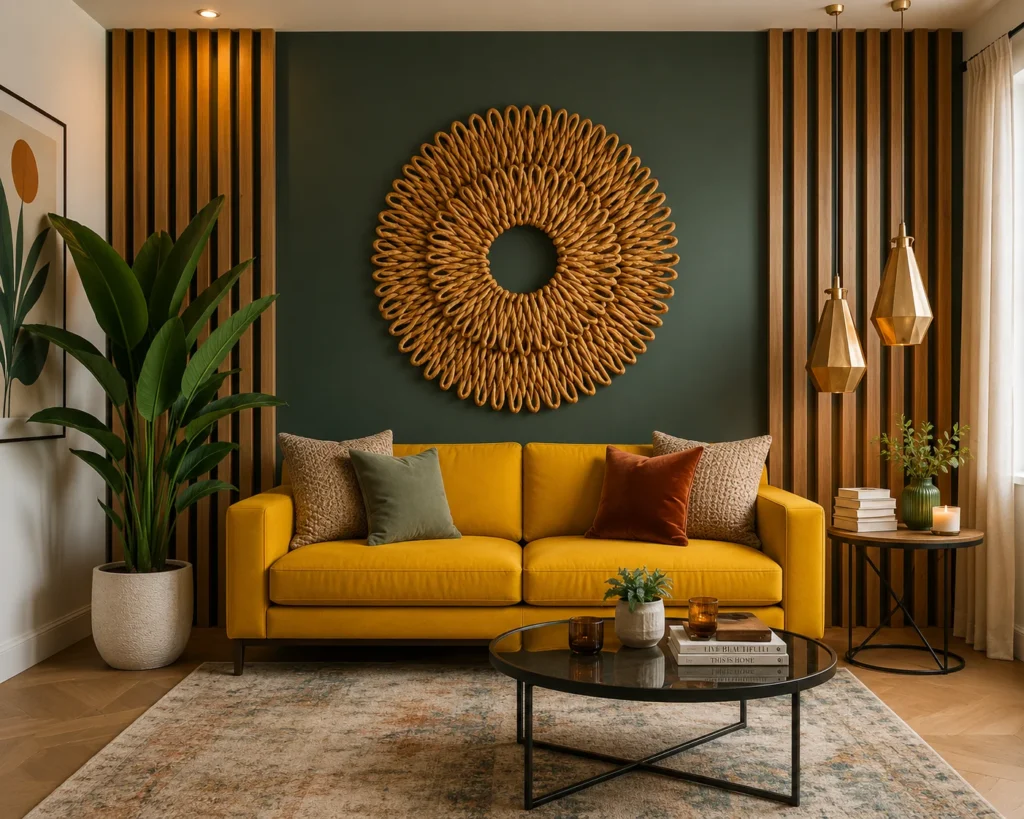
These are the swaps and changes that make the biggest difference for the least money.
What Actually Makes a Room Look Expensive
Before the specific ideas, it helps to understand what “expensive-looking” actually means because it’s not about the price of individual items. It’s about:
Cohesion. Everything in the room feels like it belongs together. Not matching cohesive. A shared color palette or tone ties things together in a way that feels intentional.
Scale. Furniture and decor that fit the room proportionally. A rug that’s too small, curtains that are too short, or art that’s too tiny all signal “budget” louder than the actual price of the items.
Editing. Fewer things, displayed well. A room that looks expensive usually has more empty space than a room that looks cluttered even when the items in it cost less.
Quality in the right places. Not quality everywhere quality where it matters most. A beautiful rug, a well-upholstered sofa, one statement piece. Everything else can be simple and inexpensive.
Keep these four principles in mind as you work through the ideas below.
High-Impact, Low-Cost Living Room Swaps
1. Get the Rug Size Right
Cost: $50–$150 (or free, if you already own a rug)
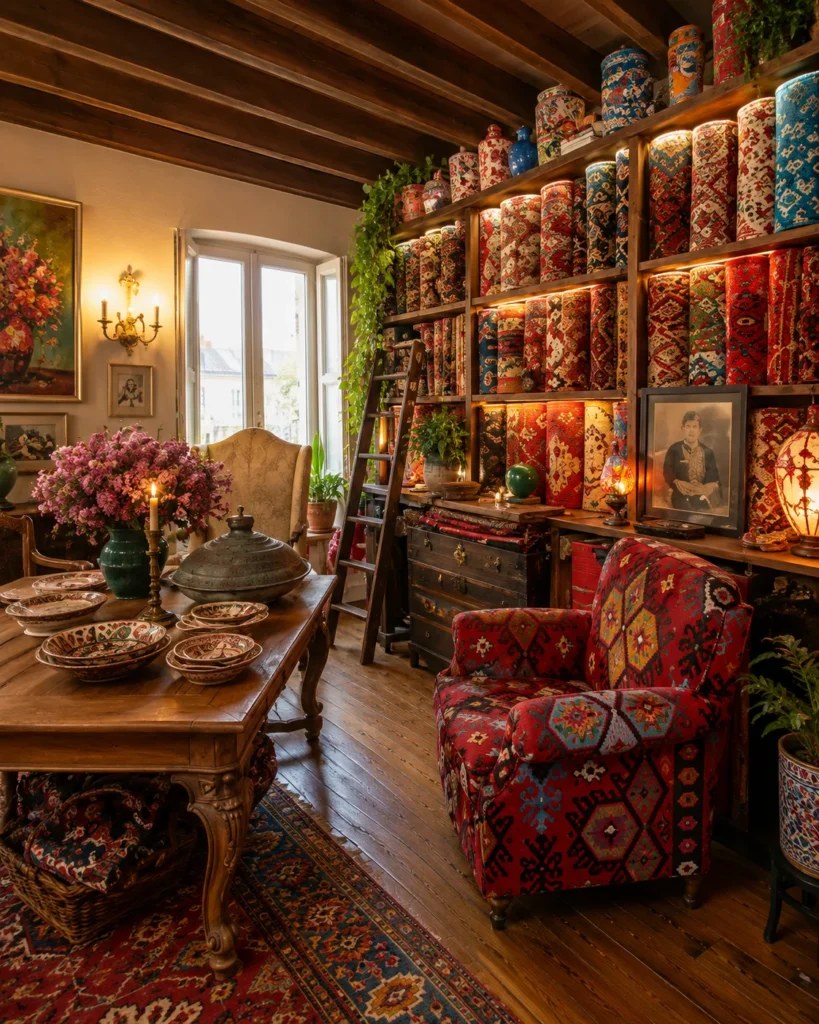
Nothing makes a living room look cheaper faster than a rug that’s too small. A rug that floats in the center of the furniture grouping with everything’s legs off it reads as an afterthought.
The fix: all front legs of the sofa and chairs on the rug, or all legs on it entirely. For most living rooms, this means an 8×10 or 9×12 rug larger than most people buy.
If your current rug is too small, try layering it over a larger, cheaper rug (a natural jute rug works perfectly as a base layer for $60–$100). The layered look is actually a current design trend and costs less than buying one large rug.
2. Hang Curtains from Ceiling to Floor
Cost: $30–$80
Builder-grade curtains hung at the window frame make ceilings feel low and windows feel small. The fix costs almost nothing to execute:
Mount the rod 4–6 inches below the ceiling (or as high as possible). Extend the rod 8–12 inches beyond the window frame on each side. Use curtains that touch or slightly puddle on the floor.
The result looks like a room from an interior design magazine. IKEA’s RITVA curtains ($25 per panel) are a classic budget pick that photographers use in styled shoots. No one can tell they cost $25.
3. Create a Gallery Wall
Cost: $20–$50
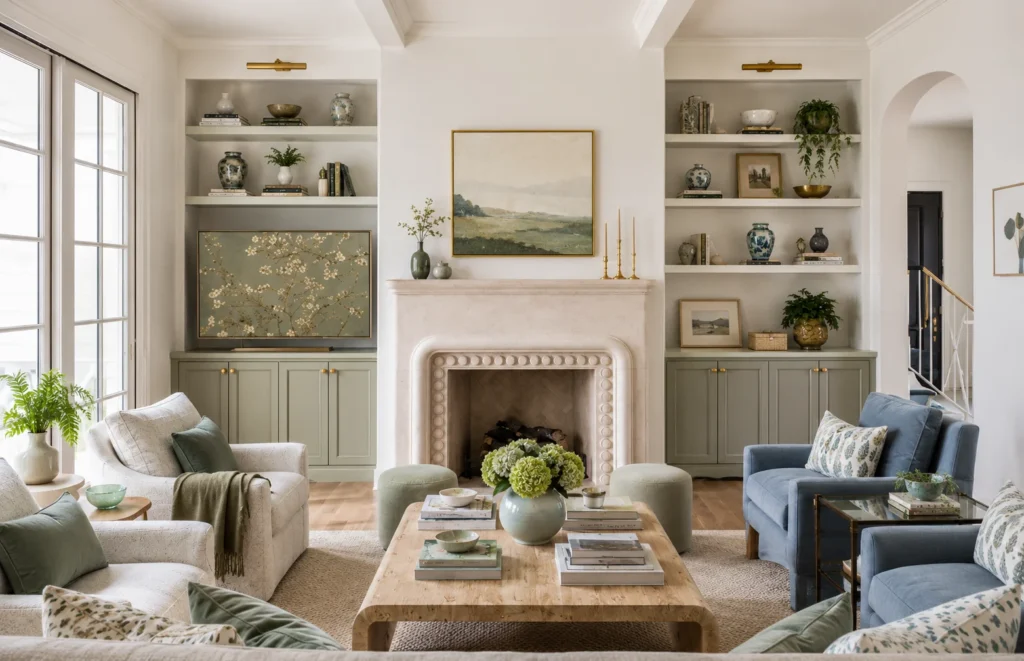
A gallery wall looks curated, intentional, and expensive. It also costs almost nothing if you approach it correctly.
Print photos at a drugstore for $0.15–$0.25 each. Download free printable art from websites like Unsplash or Art Institute of Chicago’s free collection. Frame everything in matching simple frames from the dollar store or IKEA (the RIBBA frame is $3–$6 each). Arrange on the wall.
Lay the arrangement out on the floor first. Use paper templates taped to the wall to plan spacing before you put holes in anything. The result looks like a designer installation.
4. Add Throw Pillows in a Deliberate Color Story
Cost: $20–$50
Throw pillows are the fastest way to change a living room’s entire feel and one of the most commonly done wrong. The mistake: too many pillows in too many patterns with no connection to each other.
The formula that works: pick two to three colors from your room. Choose pillows in those colors with varying textures (one solid, one textured, one with a subtle pattern). Use an odd number (three or five) rather than even.
Pillow covers (not whole pillows) from Amazon or H&M Home cost $8–$15 each and swap seasonally without needing to replace the inserts.
5. Style the Coffee Table With a Tray
Cost: $10–$25
A coffee table with random items on it looks messy. The same items on a tray look styled.
Find a wooden, rattan, mirrored, or lacquered tray at a thrift store or dollar store. Place it on the coffee table. Group a few items on it: a candle, a small plant or succulent, and one or two objects. Keep everything else off the table.
The tray creates visual organization and makes the coffee table look like something a stylist arranged.
6. Swap Out Outdated Light Fixtures
Cost: $30–$80
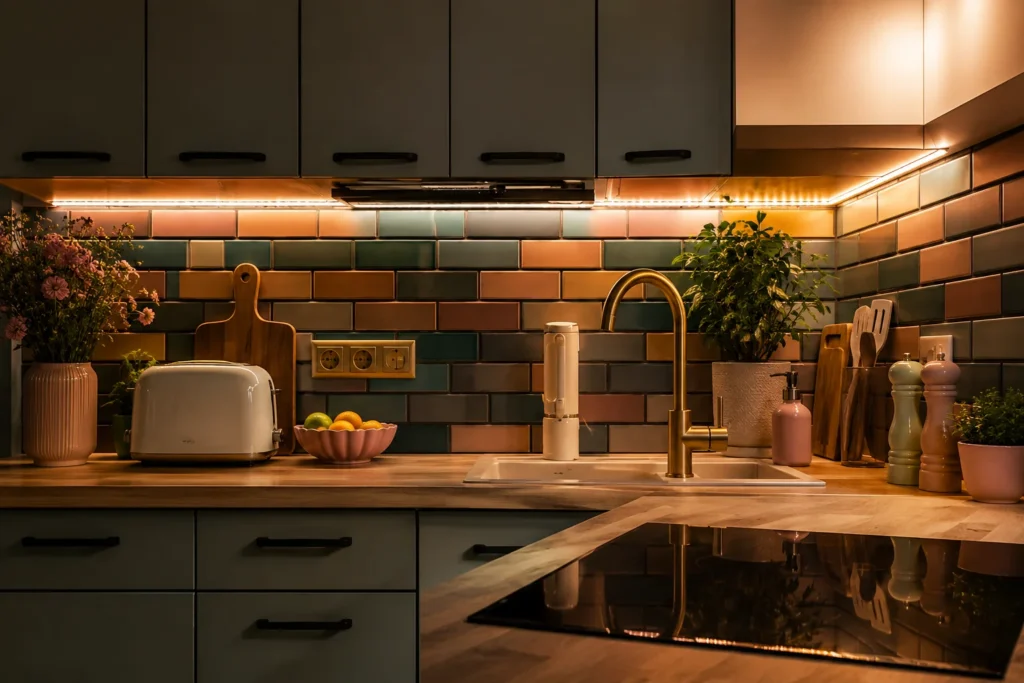
Lighting has more impact on how a room feels than almost anything else and outdated fixtures are one of the first things that date a space.
A new pendant light or chandelier for the living room costs $40–$100 at discount home stores or online. Installation takes 30 minutes with a YouTube tutorial if you’re comfortable with basic electrical work (or 30 minutes for an electrician if you’re not).
Alternatively: add floor lamps and table lamps instead of relying on overhead lighting. Two or three lamps creating pools of warm light make a room feel cozy and sophisticated in a way that overhead lighting never does.
7. Paint an Accent Wall
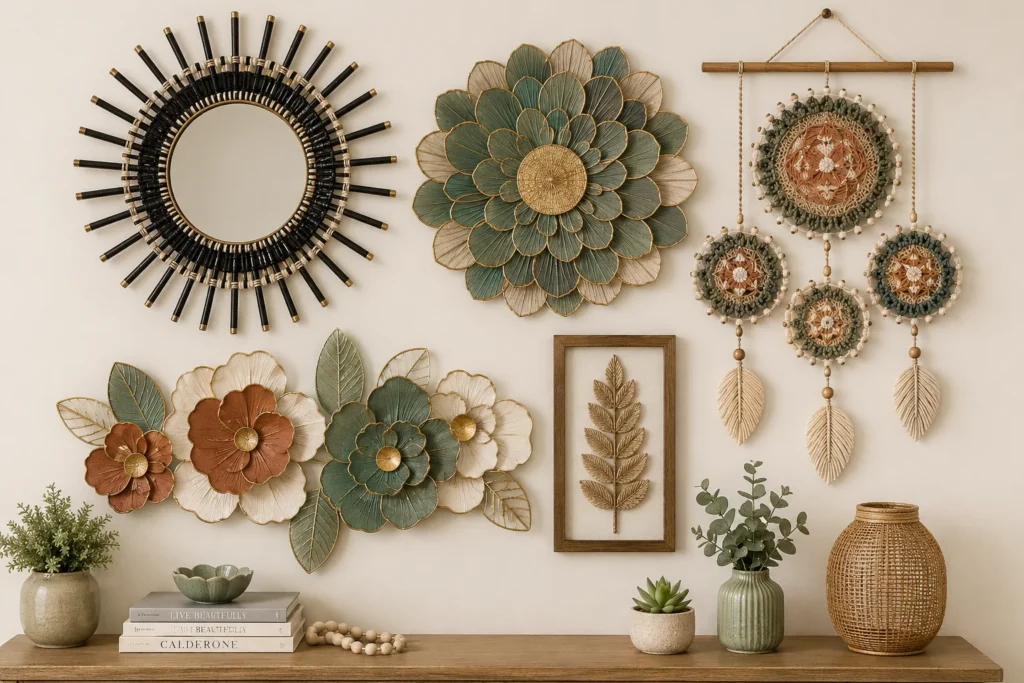
Cost: $25–$40
A single accent wall in a deeper, richer color adds depth and intentionality to a living room without the cost or commitment of painting the whole room.
Dark green, navy, terracotta, deep burgundy saturated colors on one wall make the other walls look brighter, make the room feel more considered, and cost one can of paint.
Choose the wall behind the sofa or the one that draws the eye when you enter the room. Paint it, let the furniture do the rest.
8. Update Hardware and Switch Plates
Cost: $20–$50 total
This sounds minor. The effect is not.
Old brass switch plates, dated door handles, and original builder hardware all signal that a room hasn’t been touched. Replacing switch plates (plain white ones cost $0.50–$1 each at any hardware store) and updating any outdated hardware costs almost nothing and removes the visual noise that dates a space.
9. Add a Large Plant
Cost: $15–$50
A large plant a fiddle leaf fig, a bird of paradise, a large pothos trailing from a shelf, an oversized snake plant fills vertical space, adds life and color, and creates the kind of organic texture that designers use to soften rooms.
Large plants at nurseries cost $30–$60. The same plants at places like IKEA, Trader Joe’s, or Home Depot cost $15–$30. The visual impact is identical regardless of where you bought it.
10. Style Your Bookshelf Intentionally
Cost: Free
A bookshelf filled spine-out with every book you own looks like a library. A bookshelf styled intentionally looks like a design feature.
The approach: remove everything. Put back only what’s intentional. Group books by color or remove jackets for a neutral tone. Add one or two objects between book groupings a plant, a candle, a small piece of art. Turn a few books horizontal to create visual variety.
This costs nothing and takes 30 minutes. The result photographs beautifully and makes the whole wall feel designed.
11. Invest in One Statement Piece
Cost: $30–$150 secondhand
Every expensive-looking room has one thing that draws the eye one piece that does the heavy lifting. A vintage mirror. An oversized piece of art. A beautifully shaped lamp. A distinctive side table.
This piece doesn’t need to be new or expensive. It needs to be interesting. Facebook Marketplace, estate sales, and thrift stores are where these pieces live often for $20–$80, having originally cost many times that.
Define what your living room’s statement piece would be. Then spend a few weeks looking for it secondhand before buying anything new.
12. Free Up the Floor
Cost: Free
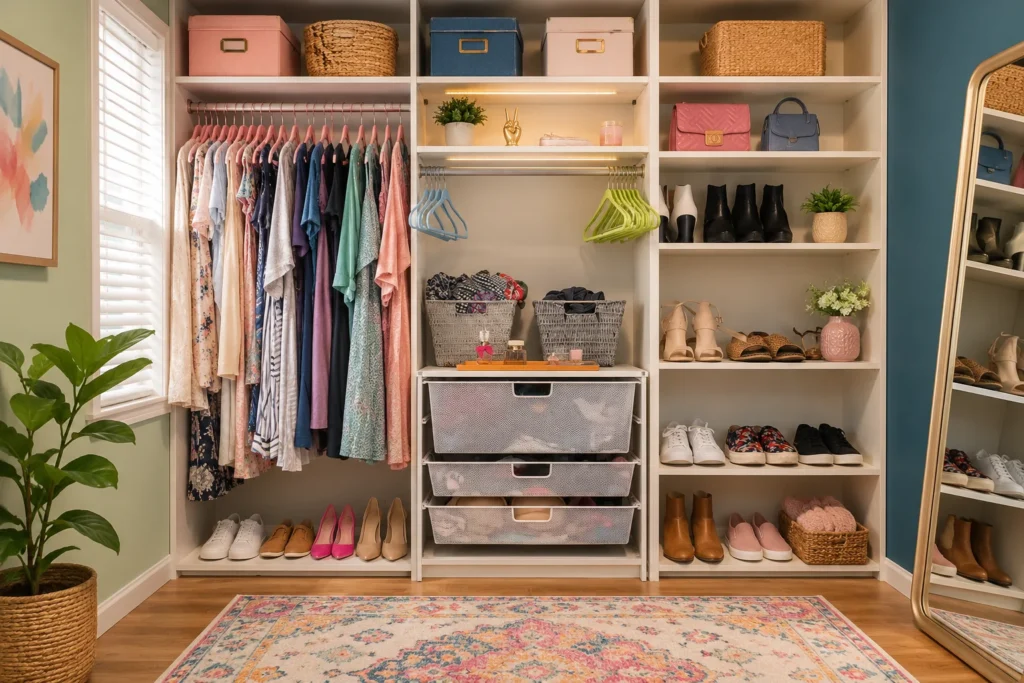
Clutter on the floor shoes by the door, bags dropped in corners, items that don’t have a home makes a living room look smaller and more chaotic than any decorating choice can fix.
A basket for blankets. Hooks by the door for bags. A designated spot for everything that tends to drift. These organizational moves cost almost nothing and make the room look significantly more put-together immediately.
The Budget Living Room Refresh Checklist
Before spending anything:
- Declutter and remove what doesn’t belong
- Rearrange furniture (try at least two configurations)
- Clear every surface and style intentionally
Under $50:
- New throw pillow covers
- Tray for the coffee table
- Gallery wall with printed photos and budget frames
- New switch plates and outlet covers
Under $100:
- Ceiling-height curtains
- Large plant
- Accent wall paint
Under $200:
- New rug or layered rug situation
- Statement secondhand mirror or art piece
- Updated light fixture
This is the order that produces the most visible results for the least money starting with what costs nothing and working toward what costs more only after the free moves are done.
For the complete room-by-room budget decorating framework, my master guide on how to decorate your home on a budget covers every room with the same approach.
And if you want to build a home decorating budget using a free online budget planner or home budget app, my guide on how to make a budget for beginners shows how to add a home decor sinking fund as a line item the same way you’d use a home budget worksheet or household budget worksheet to plan any other goal.