
American households spend an average of $1,891 per year on home furnishings and decor. New homeowners spend $8,927 in their first year alone. And the standard budget recommendation for decorating a single room runs $2,000–$12,000, with most people spending $5,000–$8,000 per room for what the industry considers “good quality.”

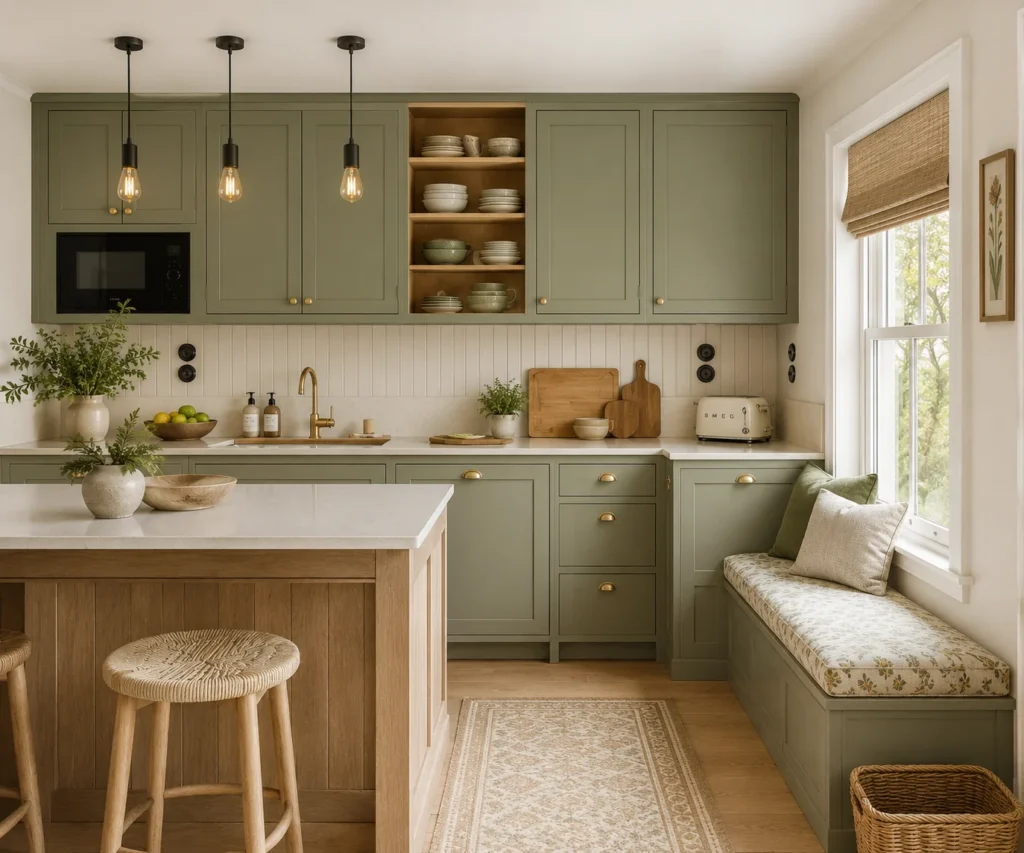
Frugal chic home decor works from a completely different premise. The goal is not to spend less on the same approach it’s to use a different approach entirely. One that produces a home that looks designed, intentional, and elevated without the price tag that normally comes with those words.
Here’s how to do it.
The Core Principle: Restraint Looks More Expensive Than Abundance
The most important frugal chic insight is counterintuitive: a room with fewer, well-chosen pieces looks more expensive than a room full of things.
This is what distinguishes genuinely chic interiors from cluttered ones not the cost of individual items, but the deliberate editing of what stays and what goes. Professional interior designers consistently cite editing as the single highest-leverage design tool available, and it costs nothing.
Before buying anything, remove. Take out everything decorative from a room every surface, every shelf. Look at what’s left. Add back only what earns its place: what you genuinely love, what serves the room, what contributes to a cohesive visual story. What doesn’t pass this test doesn’t return.
The room that results from this exercise often looks better than before without a single new purchase.
The Frugal Chic Color Strategy
Paint is the highest-return investment in any budget decorating project. A gallon of quality paint costs $30–$50 and transforms a room more dramatically than any furniture purchase at the same price point.
The frugal chic color approach:
Neutral walls as the foundation. Warm whites, soft greiges (gray-beige), and muted creams read as expensive because they photograph well, age gracefully, and allow any furniture or art to work within them. The specific whites that designers use consistently Benjamin Moore White Dove, Sherwin-Williams Alabaster, or their store-brand equivalents mixed to match are neutral without being cold, warm without being yellow.
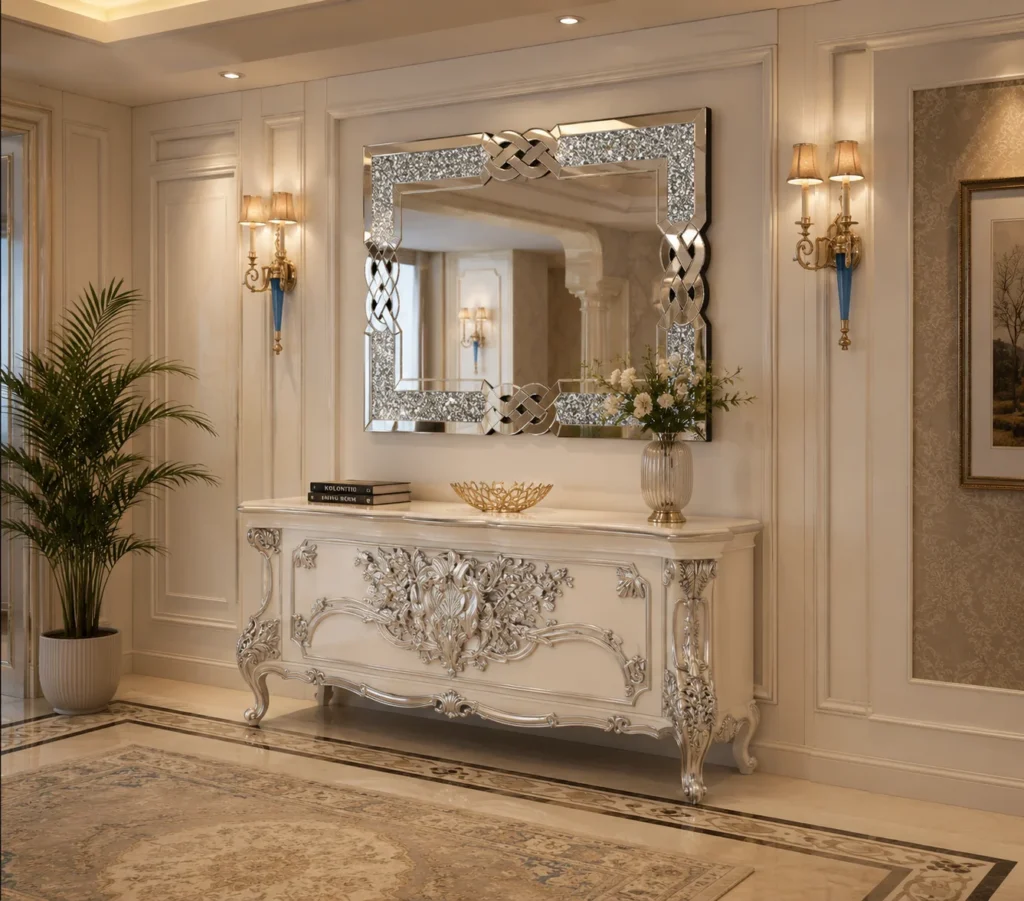
One accent wall or architectural feature. A single wall in a deeper tone, a ceiling painted a contrasting color, or a doorway painted in a saturated hue creates a designed moment without committing the entire room. This technique used in virtually every professionally decorated space costs one gallon of paint and a weekend afternoon.
Consistent color story across the room. The frugal chic edit ensures that every piece in the room, regardless of its cost, shares a color language. A $15 throw pillow in the exact tone of a $200 artwork makes both look intentional. A mismatched collection of inexpensive items, regardless of individual quality, reads as random.
The Furniture Hierarchy: Where to Spend and Where to Save
Not all furniture purchases carry equal visual weight. Frugal chic decorating allocates the largest share of any budget to the pieces with the highest visual return and saves aggressively on everything else.
Invest in: the sofa. The sofa is the visual anchor of most living rooms. A quality sofa in a neutral fabric (linen, cotton, or a linen blend in white, cream, natural, or charcoal) purchased secondhand, on clearance, or from a direct-to-consumer brand is worth spending on relative to other items. A worn, sagging, or visually busy sofa undermines every other design decision in the room regardless of how good those decisions are.
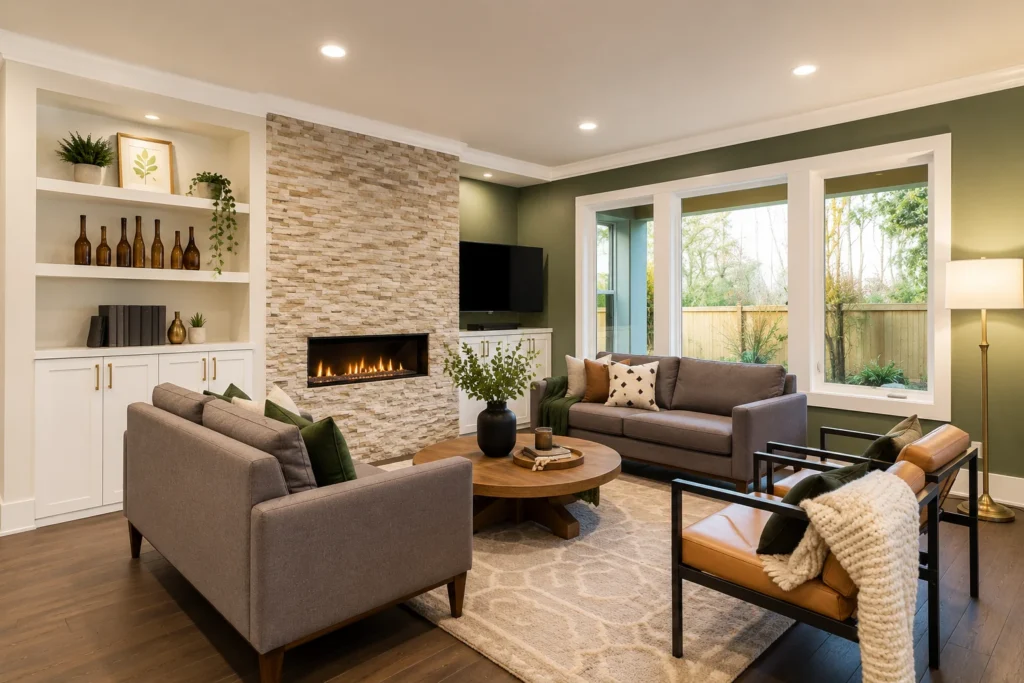
Save on: side tables, coffee tables, accent chairs. These pieces are more easily replaced, more easily found secondhand, and less visually dominant than the sofa. A vintage side table from an estate sale, a coffee table from Facebook Marketplace, or a rattan accent chair from a discount retailer all read as intentional design choices when the overall room is edited and cohesive.
Invest in: one good rug. A rug anchors the seating area, defines the room within the room, and does more design work per dollar than almost any other purchase. The right rug makes inexpensive furniture look placed; without it, even expensive furniture looks adrift. Natural fiber rugs jute, sisal, seagrass are consistently inexpensive (under $200 for an 8×10 from discount retailers), durable, and impossible to get wrong aesthetically.
Save on: art, lighting accessories, textiles. These categories are where thrift stores, estate sales, and discount retailers produce the best frugal chic returns.
Frugal Chic Art: The Gallery Wall Done Right
Original art is expensive. Framed art from big-box retailers is often visually mediocre. Frugal chic art sources:
Thrift store frames, new art inside. A vintage frame in good condition with unappealing original art costs $2–$8 at most thrift stores. Remove the original, replace with a printed botanical illustration, an abstract from a free digital art resource, a vintage map, or a page from an oversized art book. The frame often solid wood, often a style unavailable at retail is the valuable part. The content inside costs $0.50 to print at a copy shop.
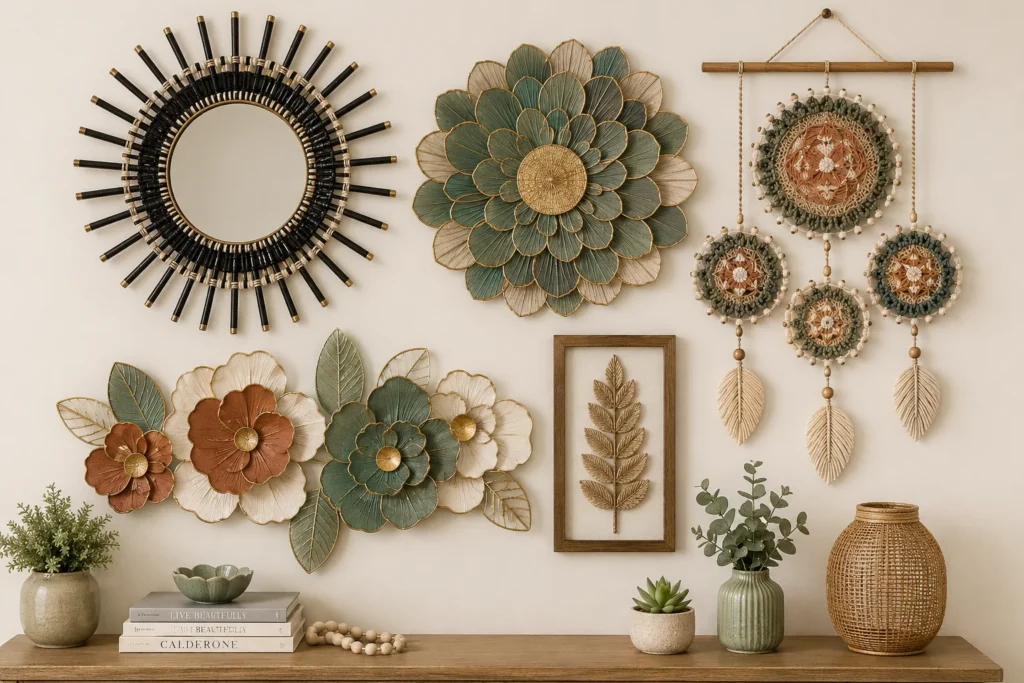
Consistent framing makes everything look cohesive. The gallery wall that looks designed uses consistent framing all black frames, all gold frames, all natural wood regardless of what’s inside. Inconsistent framing across a gallery wall is what makes it look DIY rather than designed. Consistent framing is cheap: spray paint existing frames in the same finish.
Oversize art on a budget. A single large-format print in a simple frame makes more visual impact than many small pieces at equivalent cost. Engineering prints large-format black and white prints from sites like Spoonflower or printed at a local copy shop cost $5–$20 for a print that fills a wall.
Lighting: The Fastest Way to Change a Room’s Feel
No design element changes how a room feels as quickly and completely as lighting and no design element is more consistently underfunded in budget decorating.
Overhead lighting from a single central fixture produces flat, institutional light that makes any room feel less designed than it is. Layered lighting multiple light sources at different heights produces the warmth and depth that characterizes well-designed interiors.
The frugal chic lighting upgrade:
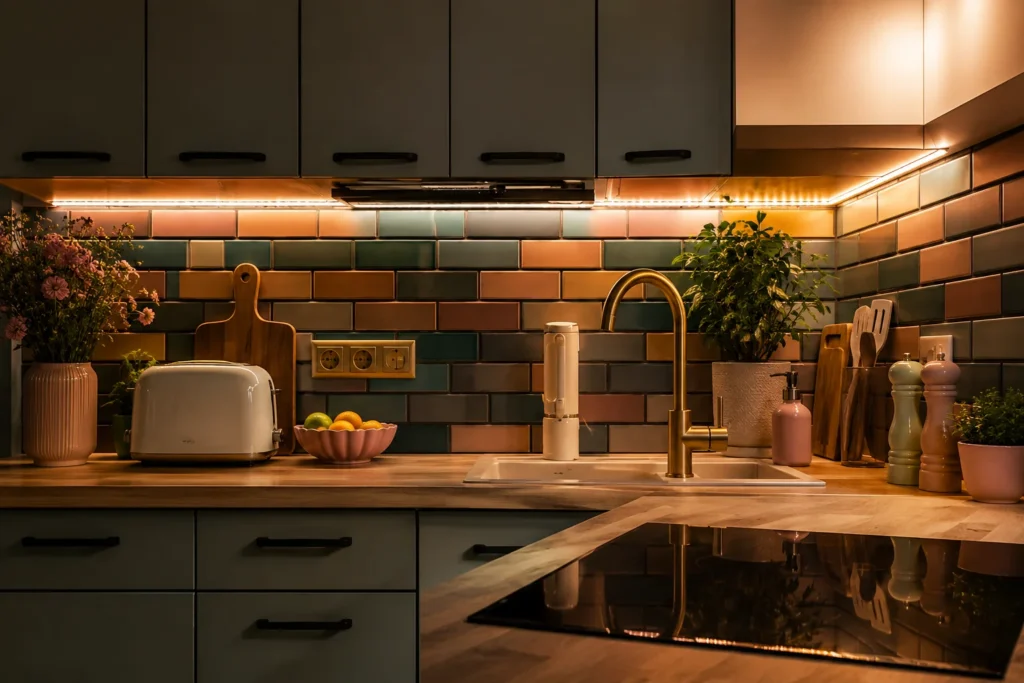
Replace overhead lighting with floor lamps and table lamps from thrift stores, discount retailers, or clearance sections. A $25 floor lamp with a warm-white bulb (2700K color temperature the warm end of the spectrum) produces more flattering, more expensive-looking light than a $200 overhead fixture on full brightness.
Warm bulb temperature is non-negotiable. Cool-white LED bulbs (4000K and above) make rooms feel like offices. Warm-white LEDs (2700K–3000K) make rooms feel like the interiors in design magazines. The bulb costs $3. The difference is significant.
Dimmer switches ($15–$25 each, installable without an electrician in most standard fixtures) give every overhead light the ability to produce warm, low ambiance at minimal cost.
Textiles: The Fastest Frugal Chic Return
Throw pillows, blankets, curtains, and rugs carry enormous visual weight relative to their cost and they’re the category most easily changed as tastes or seasons shift.
Curtains hung high and wide. Curtains hung at ceiling height (even in a room with standard 8-foot ceilings) and extending 6–12 inches beyond the window frame on each side make windows look significantly larger and ceilings significantly taller. This is the single most commonly cited designer trick for making rooms look more expensive and it costs only the price of longer curtain panels. IKEA’s MAJGULL and similar blackout panels cost $25–$40 per pair and photograph identically to panels costing five times more.
Two to three pillow textures, one color family. Pillow arrangements that look expensive use texture variation within a contained color palette a linen pillow, a velvet pillow, a printed pillow, all within the same tone family. Pillows from discount retailers or thrift stores in the right colors and textures cost $5–$15 each and achieve this immediately.
One quality throw. A single woven throw in a natural fiber cotton, wool, or a blend draped casually over a sofa or chair costs $20–$50 from discount retailers or significantly less secondhand. It adds texture, warmth, and the “finished” quality that bare upholstery doesn’t have.
Plants: The Most Underpriced Frugal Chic Tool
Living plants do design work that no purchased object replicates they add movement, organic shape, and the sense that a room is inhabited and cared for rather than just decorated.
A large potted plant (a snake plant, a pothos trained up a moss pole, a fiddle leaf fig when healthy) in a corner that would otherwise be empty accomplishes more than any corner furniture piece at equivalent cost.

Plant propagation dividing existing plants or rooting cuttings, produces new plants for free. Local plant swaps and Facebook Marketplace free sections regularly offer established plants at no cost. The frugal chic approach to plants is to start small, propagate aggressively, and allow the plants to grow into the room rather than buying large specimens at retail prices.
According to HGTV’s budget decorating guide, interior designers consistently cite plants and greenery as one of the most impactful and least expensive tools for making a space feel finished and alive.
The Thrift Store and Estate Sale Strategy
The frugal chic home is built significantly from secondhand sources not because they’re the only affordable option, but because they consistently produce the most interesting, most individual, and most design-forward results.
What to always buy secondhand: frames, mirrors, ceramics, vases, lamps, side tables, occasional chairs, artwork, and textiles. These items are available in abundance at thrift stores, estate sales, and Facebook Marketplace at 5–20% of retail cost with no quality loss.
What to be more selective about secondhand: upholstered sofas and mattresses (condition inspection essential), rugs with significant wear, wooden furniture with structural issues.
The estate sale advantage: Estate sales typically offer better quality at similar or lower prices than thrift stores because the items come from complete household dispersals rather than donation sorting. Furniture, art, lamps, and ceramics from estate sales frequently include high-quality items at 10–30% of original retail.
Frequently Asked Questions
What is frugal chic home decor?
Frugal chic home decor is the approach of creating an elevated, intentional-looking home on a limited budget using editing, paint, strategic secondhand sourcing, textiles, and lighting to produce rooms that look designed without the $2,000–$12,000 per room cost of conventional decorating approaches.
What is the most impactful low-cost home decor change?
Paint produces the highest return per dollar of any home decor investment. A $30–$50 gallon of paint in a well-chosen neutral transforms a room more completely than any furniture purchase at the same price. Lighting is the second-highest return: warm-bulb floor and table lamps completely change how a room feels at minimal cost.
Where do interior designers shop for budget decor?
Thrift stores and estate sales for frames, mirrors, ceramics, lamps, and art. IKEA for curtains, textiles, and basic storage. Amazon and Target for throw pillows, bulbs, and small accessories. Facebook Marketplace for furniture, rugs, and plants. The frugal chic approach uses all of these rather than any single source.
How do I make a room look expensive without spending much?
Edit aggressively (remove everything that doesn’t earn its place), paint in a warm neutral, hang curtains at ceiling height wider than the window, add layered warm lighting, use consistent framing for any art, and add one or two quality textiles. These changes cost $100–$300 total and produce more visual improvement than $2,000 spent on new furniture in a cluttered, poorly lit room.
For more on creating a home that looks intentional without overspending, read our guide on frugal living tips that actually change your spending patterns and the frugal aesthetic how to live beautifully for less.