
Let me say something that most personal finance articles won’t: this is genuinely hard.
Not “requires discipline” hard. Not “needs a better mindset” hard. Actually, structurally hard because you are trying to build financial progress from a position where the math barely works in the first place. The paycheck arrives, it covers the bills if you’re lucky, and then it’s gone. And somewhere in that impossible arithmetic, you’re supposed to also be paying off debt.

If you’ve read advice that tells you to simply “cut your expenses” and “pay more than the minimum,” you know how useless it feels when there’s nothing left to cut and no money for more than the minimum. That advice isn’t wrong it’s just written for someone with more breathing room than you have right now.
This guide is different. It starts where you actually are, acknowledges what makes this specific situation harder than most, and gives you a realistic plan for moving forward even when the gap between what comes in and what goes out is razor thin.
First: Understand Why This Situation Is Uniquely Difficult
Living paycheck to paycheck with debt isn’t just a money problem. It’s a timing problem, a buffer problem, and a psychological problem all at once.
The timing problem: Your bills have fixed due dates. Your paycheck arrives when it arrives. When the two don’t align perfectly, you’re constantly juggling paying this bill late to cover that one, running your account to near-zero between paydays.
The buffer problem: Most debt payoff advice assumes you can redirect extra money. But when there is no extra money when every dollar that comes in is already committed before it arrives there’s nothing to redirect.
The psychological problem: The constant financial stress of paycheck-to-paycheck living is exhausting. Decision fatigue, anxiety about what’s coming next, the mental weight of managing every dollar all of it makes it harder to think clearly and execute a long-term plan. This is real, and it matters.
Understanding these three dynamics doesn’t fix them but it does mean you can stop blaming yourself for finding it hard. The situation is hard. You’re not doing it wrong.
Step 1: Get Clear on the Exact Numbers
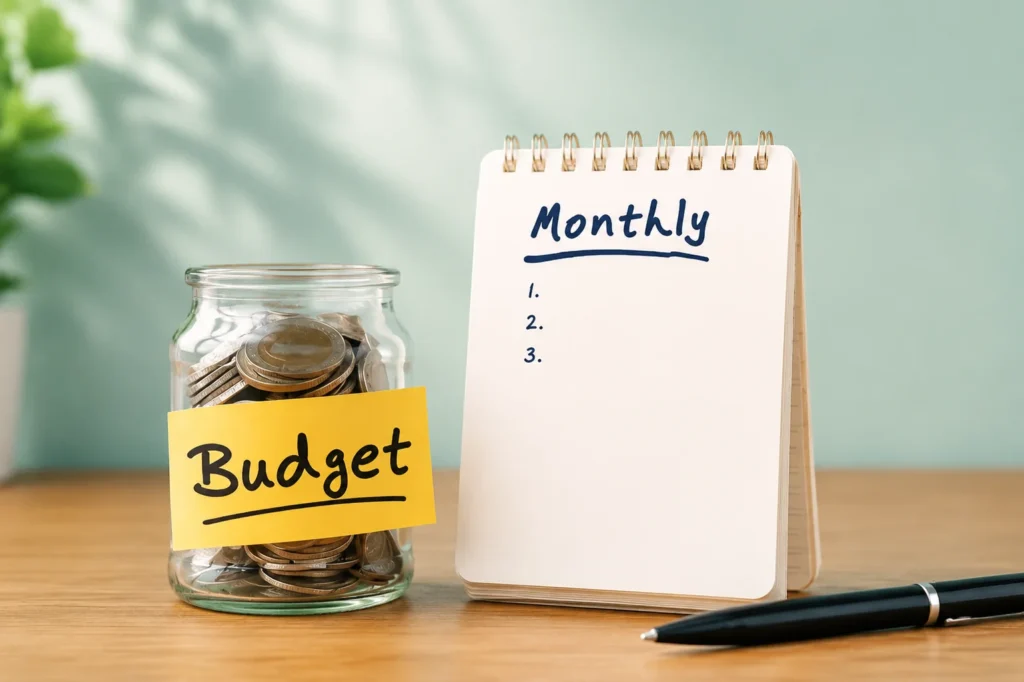
Before any debt payment plan, you need the complete picture of where you actually stand.
Write down your monthly take-home income. Every source.
Then write down every expense every single one with its amount and due date. Fixed bills, variable spending, debt minimums, everything.
Subtract total expenses from total income.
This number the result tells you exactly what you’re working with. If it’s negative, your current spending mathematically exceeds your income, and no debt payment plan will work until that gap is addressed. If it’s zero or slightly positive, there may be more flexibility than it feels like from the inside.
Most people living paycheck to paycheck have never done this calculation clearly because looking at it feels too painful. But you cannot build a realistic debt payment plan on a number you don’t know. Look at it once, clearly, and everything after this becomes more focused.
Step 2: Make Sure Every Minimum Is Covered First
When money is extremely tight, the priority must be maintaining your current accounts not accelerating payoff.
Missing a minimum payment adds a late fee, potentially increases your rate, damages your payment history, and makes a tight situation tighter. On a paycheck-to-paycheck budget, a $35 late fee can genuinely disrupt the entire month.
Set up automatic minimum payments for every account if at all possible. If you can’t automate, put due dates in your phone calendar a week in advance. The goal is that minimum payments never get missed because missed minimums always cost more than the minimum itself.
This is not giving up on paying off debt. This is stabilizing the foundation so the plan can work.
Step 3: Find the Hidden Money You Don’t Know You Have
Here’s something counterintuitive: most people living paycheck to paycheck do have some spending that isn’t necessary they just can’t see it because the stress of constant financial pressure makes everything blur together.
Go through the last 60 days of bank statements with one question per transaction: was this genuinely necessary, or did it happen because it was easy, convenient, or habitual?
Common findings on a paycheck-to-paycheck budget:
Subscriptions renewing automatically Apps, streaming services, memberships that you use occasionally or forgot about. Even $15–$30 a month in cancellations matters at this income level.
Convenience spending Grabbing something to eat because you didn’t plan ahead. A drink purchased outside the home. Delivery fees and tips on top of food costs. These small amounts add up in ways that aren’t visible until you look at them in aggregate.

Bank fees Overdraft fees, out-of-network ATM fees, monthly maintenance fees. If you’re paying any of these, switching to a fee-free bank or credit union immediately stops the bleeding. These fees are particularly cruel on tight budgets because they hit hardest when you have the least.
Even finding $30–$50 in spending that wasn’t necessary creates a small but real debt payment capacity. That $30 applied consistently to your smallest balance over 12 months is $360 and it compounds with every freed minimum payment.
Step 4: Build Your Paycheck-by-Paycheck Plan

Monthly budgets don’t work well for paycheck-to-paycheck earners because the month is too long a unit of time. Bills are due at specific dates. Money arrives at specific dates. The mismatch is where things fall apart.
A paycheck-by-paycheck debt payment plan assigns specific bills to specific paychecks based on due dates not based on an equal monthly split.
Here’s how it works:
List every bill with its due date. List your two paycheck dates. Assign each bill to the paycheck that arrives closest before the bill is due.
Now each paycheck has a specific, manageable list of bills to cover and any remaining amount after bills is your spending money for that two-week period.
This structure does two things: it eliminates the “where did my money go” question, and it makes the remaining amount visible. Even if that amount is $40 or $60 after bills, knowing it is a number you can make decisions from rather than the vague anxiety of “I don’t know what I have left.”
Step 5: Choose the Right Debt Payoff Order
When you’re living paycheck to paycheck, the standard snowball vs avalanche debate takes a backseat to a third question: which debt is causing the most immediate financial damage?
Pay minimums on everything. This is non-negotiable.
Then apply extra however small in this order:
First: Any account with a missed payment or growing penalties. Getting this current stops the escalating damage.
Second: Your smallest balance. This is the most important choice for paycheck-to-paycheck earners specifically. Here’s why:
Every debt you fully eliminate removes its minimum payment from your monthly obligations permanently. When your monthly budget has no room, eliminating a $200 credit card with a $25 minimum payment doesn’t just remove $200 from your total debt. It frees $25 every single month going forward. That $25 immediately becomes capacity on the next balance.
On a paycheck-to-paycheck budget, the freed minimums compound faster than the savings from avalanche. The mathematical difference in total paid is less significant than the practical difference of having more capacity each month.
Start with the smallest balance. Put every extra dollar there. When it’s gone, roll its freed minimum into the next one.
Step 6: How to Clear Debt When There’s Almost Nothing Extra

This is the hardest part to address honestly: what do you do when there genuinely is nothing extra after bills and necessities?
Three approaches that work even with very small amounts:
The Snowflake method: Any unexpected money refunds, small windfalls, found money, cashback, a gift goes directly to your target debt the day it arrives. $12 from a returned item. $25 from a birthday card. These amounts feel too small to matter. Applied immediately to a target balance, they do matter because small balances fall faster than big ones and every fallen balance frees a minimum payment.
Sell something: A focused weekend of listing things you own on Facebook Marketplace, eBay, or Poshmark can generate $100–$300 that would take months to accumulate from a tiny monthly surplus. Apply it directly to the smallest balance.
Find one bill to reduce: One phone call to your phone provider, internet company, or insurance asking for a lower rate can free $20–$50 per month permanently. This is the highest-leverage action available to most people because the savings happen automatically every subsequent month without any ongoing effort.
Step 7: Ask for Help You May Not Know Exists

When you’re trying to get debt relief and you’re living paycheck to paycheck, there may be assistance available that directly frees money for debt payments.
LIHEAP (Low Income Home Energy Assistance Program): Federal assistance for heating and cooling costs. If energy bills are consuming a large portion of your income, this program can meaningfully reduce that expense.
SNAP: Food assistance that reduces grocery spending. Money freed from groceries can go to debt.
Creditor hardship programs: Many credit card companies and lenders have hardship programs that temporarily reduce minimum payments for people experiencing financial difficulty. Call and ask you need to say specifically that you’re experiencing financial hardship and ask what options are available. This is not widely advertised but it does exist.
Medical debt assistance: If any of your debt is medical, contact the billing department directly. Most hospitals and providers have financial hardship programs that reduce or forgive balances for people below income thresholds. This is almost never mentioned in standard billing you have to ask.
Non-profit credit counseling: Non-profit credit counseling organizations (not debt settlement companies these are different) can help you build a debt payment plan and sometimes negotiate with creditors on your behalf. Look for agencies affiliated with the NFCC (National Foundation for Credit Counseling). These services are free or very low cost.
Getting help with debt is not failure. These programs exist because this situation is common and because getting help now is better than the alternative of falling further behind.
Step 8: Protect the Emergency Micro-Fund
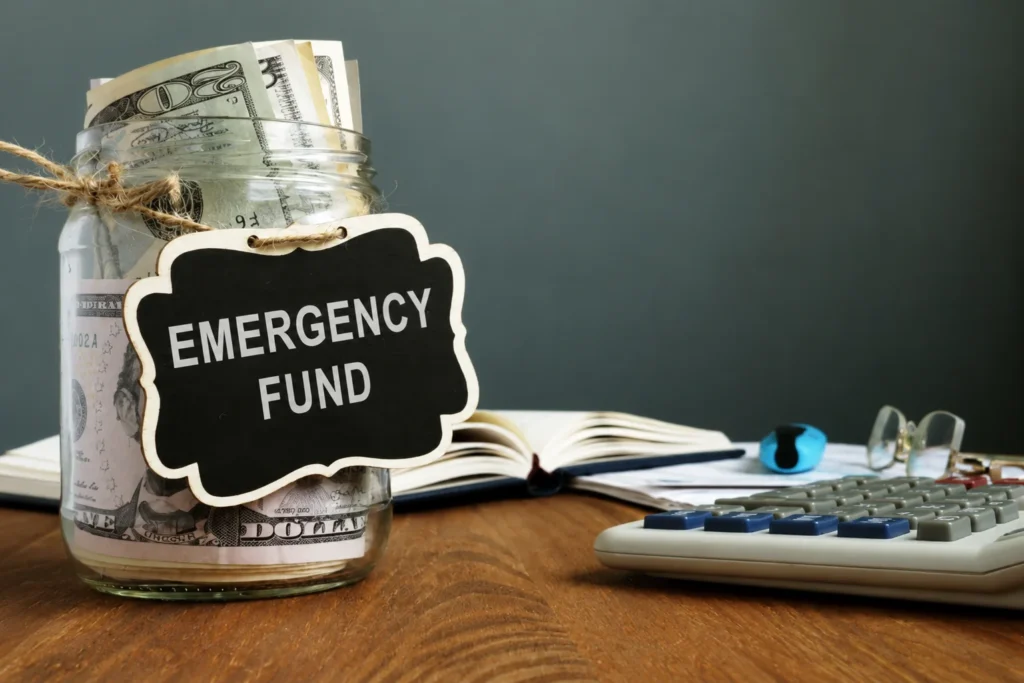
Standard advice says build a full emergency fund before aggressively paying debt. On a paycheck-to-paycheck budget, this advice is impractical you can’t wait years to start making progress.
A modified approach: save a small amount alongside debt payoff. Even $10 a month into a separate account that is only touched for genuine emergencies.
The reason this matters: without any buffer, a single unexpected expense a $75 car repair, a $50 medical copay requires you to either miss a debt payment or go further into debt. Either outcome sets you back more than the emergency itself.
Even $100–$200 in a separate account built slowly, $10 or $20 at a time breaks that cycle. It keeps one bad week from undoing months of progress.
Step 9: What to Do About Large Debt When You Have Almost Nothing
If you’re trying to figure out how to get rid of 30k in credit card debt or a similarly large amount while living paycheck to paycheck, the honest answer is: it won’t happen fast. But it can happen.
The same principles apply regardless of the total amount:
Stop adding to it. Make all minimums. Find and eliminate the smallest balance first to free its minimum. Roll freed minimums forward. Apply every windfall. Do this consistently for months, then years.
A large debt paid off over five years of consistent small actions is infinitely better than a large debt that keeps growing because you’re overwhelmed and disengaged.
The way to approach a large total debt when your capacity is small is to stop looking at the total and look only at your current target balance. You don’t need to figure out how to clear $30,000. You need to figure out how to clear the smallest $400. Then the next one.
This is not minimizing the challenge. It’s managing it in a way that’s actually sustainable.
Step 10: Manage the Emotional Side

Paying off debt while living paycheck to paycheck is as much an emotional challenge as it is a financial one. And most financial advice ignores the emotional part entirely.
The anxiety that comes with constant financial stress is real. The fatigue of managing money so carefully for so long is real. The frustration of making progress and then having one unexpected expense undo it is real.
A few things that help with the emotional side:
Track visible progress. Keep a simple list of your debts and update the balances monthly. Watching numbers go down even slowly changes how the process feels.
Celebrate every eliminated balance. Not extravagantly. But acknowledge it. The day a balance hits zero is a real milestone treat it like one.
Connect with others in similar situations. Online communities of people working through debt while on tight budgets (subreddits like r/debtfree, or frugal living communities) can provide perspective, support, and practical tips from people who understand the actual constraints.
Give yourself credit for staying consistent. Most people in this situation give up. The fact that you’re building a plan and executing it month after month is genuinely difficult. It matters.
How Long Does It Actually Take?

Honestly: it depends entirely on the total debt, the interest rates, and how much extra capacity you can find each month.
What I can tell you is that the paycheck-to-paycheck constraint, while real, is less of a barrier than it feels like when you’re in it. Even $30–$50 per month applied consistently to a snowball builds momentum. Freed minimums compound the effect over time. Windfalls accelerate the timeline unpredictably.
The difference between three years and seven years isn’t usually a dramatic change in income. It’s consistency staying on the path even when progress feels invisible, applying the freed minimums instead of absorbing them into lifestyle, and not quitting after a hard month.
For a detailed walk-through of the debt payoff strategy that works best when you’re in a paycheck-to-paycheck situation, my guide on how to pay off debt fast covers the snowball method, freed-minimum compounding, and how to handle setbacks.
And if finding even a small amount of extra income would meaningfully change your trajectory which it usually does my guide on how to make extra money from home covers realistic options that work within real budget and time constraints.
For the spending side finding the $30–$50 in existing spending that can become a debt payment my guide on how to save money fast on a tight budget is written specifically for situations like this one.