
More than half of Americans 53% say the cost of groceries is a major source of stress in their life, according to a July 2025 survey by the Associated Press and NORC Center for Public Affairs Research.
That’s not surprising. Grocery prices have risen approximately 27% since 2020. Meat jumped 12.3% from 2024 to 2025 alone. And the average American household now spends $940 per month on groceries before a single restaurant meal or delivery order is added.
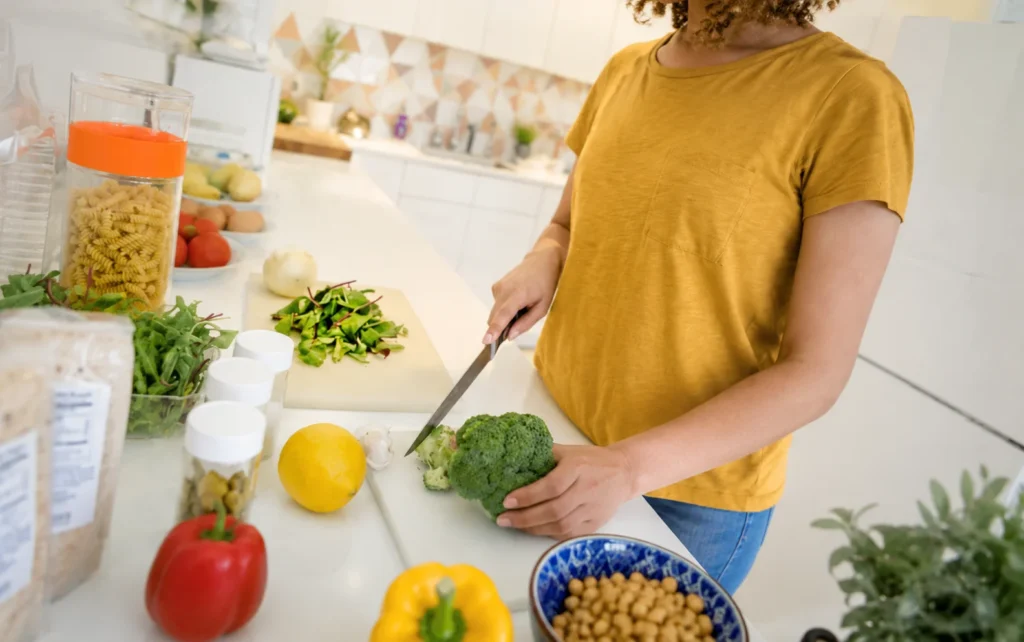
What is surprising is how much of that spending is recoverable not by eating worse, but by shopping smarter. Meal planning alone saves the average family $1,200–$1,600 per year. Store brand substitution saves 25–30% across most staple categories. Loyalty program stacking saves $600–$900 per year. These strategies are available to anyone. Most people are only using one or two of them.
Here’s the full frugal grocery shopping system.
The Benchmark: Know Where You Stand First
Before cutting anything, establish a baseline. The USDA Monthly Cost of Food Reports publish four grocery budget tiers every month, adjusted for inflation, household size, age, and sex:
Thrifty Plan — the minimum for a nutritionally adequate diet when all meals are prepared at home. A family of four lands at approximately $1,002 per month on this plan.
Low-Cost Plan — slightly more budget flexibility. A family of four at approximately $1,300 per month.
Moderate Plan — average spending with meaningful variety. Family of four at $1,250–$1,400 per month.
Liberal Plan — comfortable spending with convenience and variety. Family of four at $1,631 per month.
If your household is spending above the Moderate Plan, you have a significant savings opportunity. If you’re already at or below the Thrifty Plan, the goal is to hold the line and prevent creep not slash further in ways that compromise nutrition or push you toward takeout, which costs more per serving than any home-cooked meal.
Compare your last three months of grocery spending against the USDA benchmark for your household size. That gap is your target.
The Foundation: Meal Planning Before Shopping
The highest-impact frugal grocery shopping habit is not a shopping tactic at all it’s what happens before you leave the house.
Meal planning reduces grocery spending by eliminating the two most expensive shopping behaviors: impulse purchases driven by browsing without a plan, and the delivery fallback that happens when there’s no dinner plan and everyone is tired.
A USDA study found that unplanned purchases increase 23% with each additional grocery trip. Families that meal plan and shop once per week consistently spend less than those who shop multiple times.
The meal plan doesn’t need to be elaborate. Seven dinner ideas, a rough lunch plan, and a breakfast strategy. Then a shopping list built specifically to execute that plan. When you go to the store knowing exactly what you need, the browsing that produces impulse spending stops happening because you’re working through a list, not exploring.
Reverse the typical process: check the store’s weekly circular before planning the week’s meals. Build the meal plan around what’s on sale rather than planning meals and hoping the ingredients are reasonably priced. This captures discount pricing every week without couponing or strategic complexity.
Where You Shop Matters More Than You Think
The store you choose determines the price ceiling of your grocery bill before any other strategy is applied.
ALDI consistently prices 20–30% lower than conventional supermarkets across most comparable categories. Walmart’s grocery prices are typically 10–15% below regional supermarket chains. Lidl and similar discount grocers operate on a similar model to ALDI. These stores carry fewer products, fewer name brands, and fewer specialty items and that simplicity is exactly what produces the price difference.
Shopping exclusively at premium grocers (Whole Foods, Fresh Market, specialty health food stores) is genuinely the most expensive grocery shopping strategy available. There are categories where premium stores are worth the cost specialty dietary products, certain organic produce, specific items not available elsewhere. For staples, there is no nutritional or quality difference that justifies a 30–50% price premium.
A practical two-store strategy: primary weekly shopping at a discount grocer (ALDI, Walmart, Lidl) for staples, protein, dairy, and frozen goods. Secondary sourcing at a conventional or specialty grocer for specific items the discount grocer doesn’t carry. This captures the bulk of discount grocer pricing without fully limiting selection.
The List Strategy That Works
A grocery list is only as useful as it is complete and organized.
Organize the list by store section produce together, dairy together, protein together, dry goods together. This accomplishes two things: it reduces the time spent in the store (less browsing time means less impulse spending), and it prevents the “forgot one thing in the back of the store” extra trip through the aisles that consistently produces additional purchases.
Check the pantry, freezer, and refrigerator before writing the list. Write down specifically what’s running low not what you think might be running low. The USDA estimates American households waste 30–40% of food purchased, often because ingredients get forgotten in the back of the pantry or the freezer and duplicate purchases accumulate. A pantry check before shopping is the most effective waste-prevention tool available and costs nothing.
Never shop hungry. Research consistently shows that hunger increases the tendency toward impulse purchases particularly calorie-dense, higher-cost snack items. Eat before shopping, without exception.
Store Brands: The Most Underutilized Frugal Grocery Strategy
Store brands are the highest-return frugal grocery shopping strategy for most households and the most frequently overlooked.
The FDA requires generic and store-brand food products to meet the same safety and quality standards as name brands. The only legally required difference between a store-brand and name-brand canned good, for instance, is the packaging and the price which is typically 25–30% lower.
Categories where store brands consistently match or equal name brands in quality: flour, sugar, rice, pasta, canned goods, frozen vegetables, dairy products, cooking oils, vinegar, spices, condiments, cleaning products, paper goods, and over-the-counter medications.
Categories where quality may vary and comparing the store brand is worth doing before committing: crackers and snack foods (texture differences are real), certain cheeses, and items where specific brand formulations genuinely affect the outcome of recipes you make consistently.
Switching 10–15 staple items from name brand to store brand items you buy every week regardless produces a permanent reduction in grocery spending without requiring any ongoing effort after the initial switch.
Loyalty Programs and Cash Back Apps

Loyalty programs at major grocery chains offer personalized digital coupons based on your purchase history, loaded directly to your account. The discount applies automatically at checkout when you scan your loyalty card.
Most loyalty programs also offer points accumulation redeemable for gas discounts or store credit. The per-purchase savings are modest $5–$15 per shop but they compound over a year into $600–$900 in recovered spending for active users.
Cash back apps like Ibotta offer rebates on specific items purchased at participating stores. After shopping, you photograph your receipt, confirm the qualifying purchases, and receive cash back to a connected account. The rebates are item-specific and change weekly. Active Ibotta users typically recover $20–$50 per month from purchases they were already making.
Stacking loyalty program discounts with cash back app rebates on the same purchase produces double savings both the loyalty program discount and the cash back with no additional effort beyond loading both before shopping.
Bulk Buying: When It Saves and When It Doesn’t
The per-unit math on bulk purchases is almost always better than standard packaging. The real question is whether you’ll actually use it before it expires because food waste eliminates any savings advantage immediately.
Buy in bulk: non-perishables you use consistently. Rice, pasta, dried beans, flour, sugar, oats, canned goods, cooking oil, paper products, cleaning supplies, and personal care items have indefinite or very long shelf lives. Buying these in larger quantities at warehouse club prices (Costco, Sam’s Club) typically saves 15–20% versus supermarket pricing.
Don’t buy in bulk: perishables with short shelf lives. Buying five pounds of salad greens because the per-pound price is better than one pound is savings on paper and waste in practice if you don’t use five pounds of greens before they wilt. Assess realistic consumption rates honestly before committing to bulk quantities of any fresh item.
Freeze to extend bulk perishables. Meat bought in bulk when on sale can be portioned and frozen immediately, extending its useful life indefinitely and capturing the sale price without the waste risk. Bread, cooked grains, soups, and most cooked meals also freeze well. A dedicated chest freezer ($150–$200 purchase) pays for itself quickly for households that buy and freeze regularly.
Seasonal Shopping and Sale Stacking

Produce purchased in season is consistently 30–50% cheaper than the same produce out of season, and typically fresher and better tasting. Building the weekly meal plan around what’s currently in season captures pricing and quality simultaneously.
Shopping the weekly sale circular and planning around what’s discounted rather than planning meals first and hoping the ingredients are reasonably priced is the single most effective sale strategy available. Benjamin Lorr, author of The Secret Life of Groceries, calls this “reverse-engineering your meals” and it consistently produces savings without requiring a separate couponing system.
Watch for shrinkflation: products where the package size has decreased while the price stayed the same or increased. Compare the price per unit or per ounce not the total price to identify real deals versus marketing illusions. Many grocery stores display price-per-unit on the shelf tag; use it.
What to Skip: The Frugal Grocery Shopping Mistakes
Multiple store trips per week. Every additional trip is a new opportunity for unplanned spending. A USDA study found unplanned purchases increase 23% with extra trips. Plan once, shop once.
“Sale” items you wouldn’t otherwise buy. A coupon or sale on a product you don’t need isn’t a savings it’s a more expensive version of a purchase you didn’t plan to make. Coupons and sales are useful only when applied to items already on your regular shopping list.
Premium prepared and convenience foods. Pre-washed salads, pre-cut vegetables, seasoning packets, marinated proteins, and heat-and-eat meals all carry significant premiums for processing that costs very little to do at home. These items are the highest-markup products in most grocery stores.
Shopping hungry without a list. These two factors together produce the most expensive grocery trips consistently. The research on this is clear. Don’t do either.
Building a Frugal Grocery System

The frugal grocery shopping system that works consistently has three components:
Before shopping: Pantry check, meal plan built around the week’s sales, complete organized list.
During shopping: Discount grocer for staples, store brands as the default choice, loyalty app loaded, list as the guide.
After shopping: Freeze what won’t be used immediately, log what was purchased against the week’s plan, note any waste from last week to prevent repeating it.
This system takes about 30 minutes to set up each week 15 minutes for the meal plan and list, and 15 minutes at the store less than an unplanned trip takes, because the list cuts browsing time dramatically.
Frequently Asked Questions
How much should I spend on groceries per month?
The USDA Thrifty Food Plan provides monthly benchmarks by household size and age. For a single adult, the thrifty plan runs approximately $250–$312 per month. A family of four lands at approximately $1,002 per month. These benchmarks assume home cooking for nearly all meals.
What is the single most effective frugal grocery shopping strategy?
Meal planning combined with store brand substitution consistently produces the largest savings reducing the grocery bill by $1,200–$1,600 per year for the average family through reduced impulse purchases, reduced food waste, and lower per-item costs on staples.
Is ALDI actually worth it for grocery shopping?
Yes ALDI prices are consistently 20–30% lower than conventional supermarkets across most staple categories. The limited selection and no-name brands are the mechanism producing those savings. For households where the primary goal is reducing the grocery bill, ALDI is the most effective single store switch available.
How do I stop wasting food I buy?
Plan meals before shopping so everything purchased has a specific purpose. Organize the refrigerator so older items are visible at the front. Cook or freeze items approaching the end of their useful life rather than letting them expire. The USDA estimates food waste costs the average household $1,500 per year making waste reduction the frugal grocery strategy with the highest potential dollar recovery.
Are cash back apps worth using for groceries?
Yes, particularly when stacked with store loyalty programs. Active users of apps like Ibotta typically recover $20–$50 per month from purchases they were already making. The setup takes 20–30 minutes once; using them weekly takes 5 minutes after shopping.
For more on building a complete frugal food system, read our guide on frugal family meals that feed everyone well for under $1,000 per month and frugal living tips for beginners that actually stick.